
How to Introduce a Lemon Vibrator to Your Partner Without Awkwardness
Let's be real. The conversation about bringing a clitoral vibrator like the Lem into your partnership often feels riskier than it actually is. Most people assume their partner will feel hurt, replaced, or judged. In practice, the worst outcome is usually just mild confusion followed by curiosity. The thing that makes it awkward isn't the toy itself. It's the frame you use to talk about it.
I've worked with hundreds of couples navigating this exact moment, and I can tell you: the anxiety you're carrying right now is completely normal and also completely manageable. The difference between a conversation that lands and one that doesn't comes down to three things: timing, language, and positioning. Get those right, and you're not asking permission. You're opening a door.
Why the timing conversation matters more than you think
Here's what doesn't work: bringing up vibrators during sex, after sex, or when you're physically distant. You also don't want to lead with it on a day when your partner is already stressed, defensive, or distracted.
The best timing is a calm moment outside the bedroom, maybe an hour before or after you'd normally be intimate. You're looking for a window where your partner is relaxed, present, and not thinking about work or logistics. A walk, coffee together, or even a car ride where you're side-by-side (not face-to-face, which can feel too intense) works well.
Why? Because this conversation shouldn't feel like a sit-down interrogation. It's more natural when it's almost casual, which paradoxically means you need to engineer the casualness.
The frame that actually works
Forget these openings:
- "I want to try something new in the bedroom." (Implies current situation is boring.)
- "I read that vibrators can help you orgasm." (Sounds like their current efforts don't cut it.)
- "I bought something I think you'll like." (Feels like a gift wrapped in expectation.)
Try these instead:
- "I've been thinking about something that might feel really good for both of us. Can I run it by you?"
- "I read about these clitoral vibrators and honestly got curious. Want to hear why?"
- "I saw something today and thought of us. Not a big deal, just wanted to see what you think."
The key shift: you're not pitching a solution to a problem. You're introducing something because it sounds interesting, because you're curious, or because you think it might enhance something already good.
What to say next (the actual script)
After the opener, stay specific but don't over-explain. Here's a real-world version:
"I learned about these toys that work really differently than vibrators we might have tried before. They use suction instead of vibration, so it feels less buzzy and more like actual pressure and release. I was reading about how they work for a lot of people, and I got curious about trying one together. I'm not saying anything's wrong with what we do. I just thought it might be fun to explore. What do you think?"
That works because it:
- Explains the mechanics (removes mystery)
- Positions it as exploration, not correction
- Acknowledges you're bringing something new, not fixing something broken
- Asks for their actual opinion, not permission
If your partner hesitates or says no, the response is: "That makes sense. No pressure at all. Just wanted to put it out there."
Then drop it. Don't sell harder. Let them sit with the idea for a few days. Most people who say no initially come back around once the defensiveness wears off.
Addressing the fears head-on
Your partner might not say it explicitly, but they might be thinking one of these things:
"This means I'm not enough." Address it directly: "I want to be clear: this isn't about you not being able to satisfy me. It's about adding something else that feels good. Like the difference between sex and masturbation. Both are good. Different."
"You've been wanting this for a while." If that's true, own it: "Yeah, I've been thinking about it. But I wanted to talk to you first because this is about us, not just me."
"This seems like a big step." Normalize it: "I know it might feel that way, but honestly a lot of couples do this. It's not weird."
"I don't know how to use it or if I'll feel left out." Show them it's collaborative: "We'd figure it out together. It's not like I'd be doing my own thing. It's something we'd explore."
How to actually introduce the toy
Don't just hand over the Lem on a Tuesday night and hope for the best. Here's the better sequence:
If they're open to it, suggest you look at it together first, no pressure to use it immediately. Talk about it. Let them hold it, ask questions, understand how it actually works. This removes the performance anxiety and makes it feel less clinical.
When you do try it together, keep expectations low. The first time might be awkward. Your partner might not be sure what they're doing. You might both feel a little self-conscious. That's completely normal. The goal isn't mind-blowing pleasure on attempt one. It's comfort and curiosity.
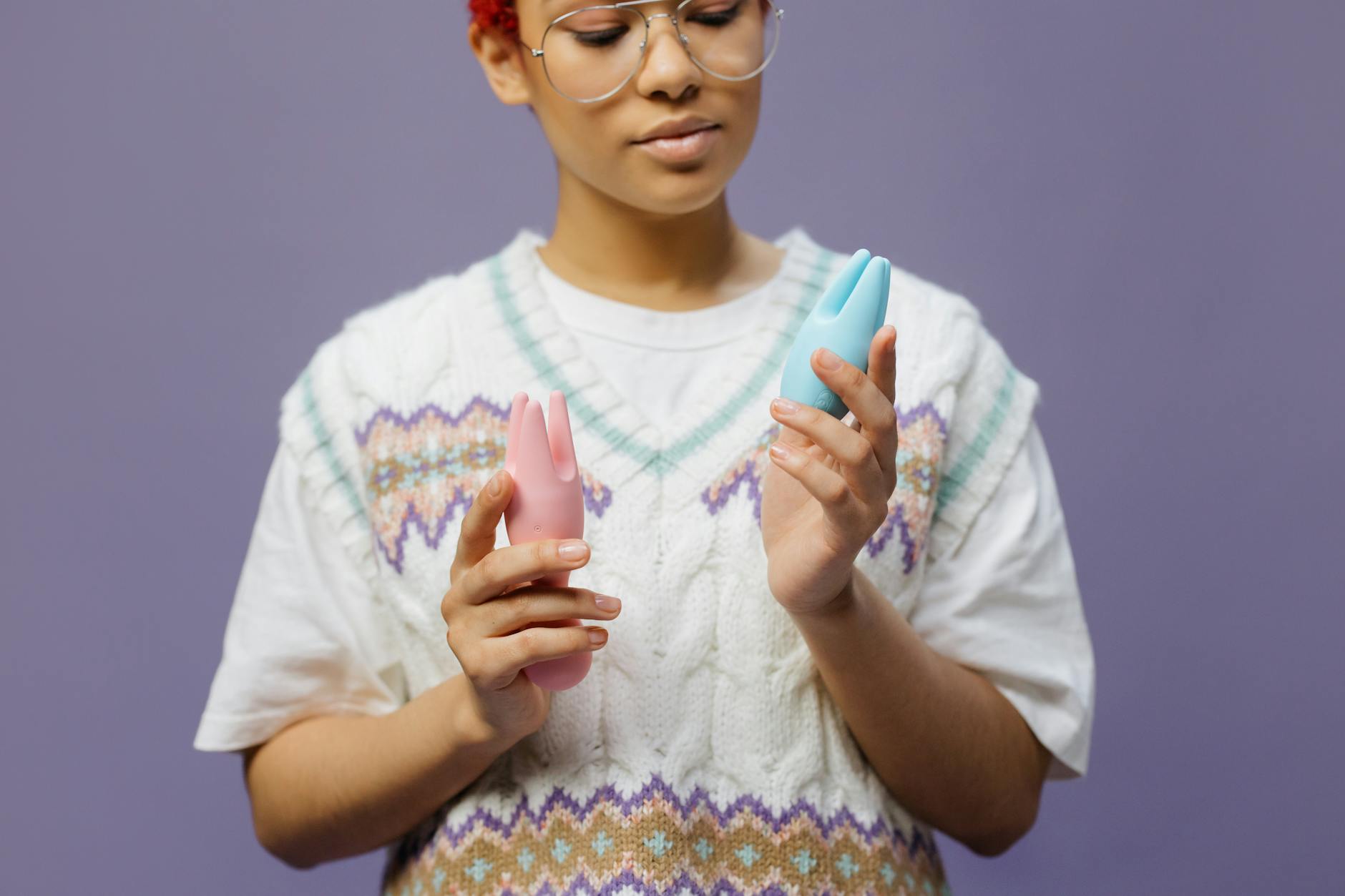
Photo by cottonbro studio on Pexels
Making it about connection, not addition
Here's the real secret that changes everything: frame the lemon vibrator not as a toy for you, but as something for both of you to play with together. "Can you try this on me?" is radically different from "I want to use this myself."
When your partner is the one controlling the experience, they feel involved and not replaced. They get to experiment. They become curious about what feels good for you, which actually deepens intimacy rather than threatening it.
Some partners will be hesitant forever, and that's okay. Some will be cautious but willing. And some will become genuinely excited once they understand what's actually happening. All three are valid.
What happens after the conversation
If they said yes, congratulations. You've opened a door that usually stays open.
If they said maybe, give it space. Check in casually once or twice without pushing. Sometimes people need time to sit with new ideas.
If they said no, listen to why. Is it genuine discomfort, or is it anxiety? Those need different responses. Genuine discomfort: respect it and don't push. Anxiety: sometimes gentle reassurance helps, sometimes it doesn't.
The conversation you're afraid of having is usually much simpler than you think. Your partner likely knows you want to feel good. They probably want that for you too. They just need to understand that this isn't a referendum on them. It's an expansion of what's already working.
FAQ
How do I know if my partner will react badly?
Most partners don't react badly. They react with confusion, then curiosity, then either genuine interest or polite "maybe later." If your partner tends to be insecure or controlling about sex in general, that's a separate issue worth addressing separately from the toy conversation itself.
What if they say they feel replaced?
That feeling is usually about worry, not reality. Gently ask what specifically makes them feel that way. Is it that you want to use it alone? That you're more excited about it than about them? Understanding the actual fear makes it easier to address. Sometimes the solution is "we use it together" or "I want you to be the one controlling it."
Should I buy the toy before or after the conversation?
After, unless your partner specifically asks. Buying it first can feel presumptuous and makes them feel like you've already decided. A conversation where they have input means they feel like a participant, not an audience.
Is it okay to introduce this if we've never really talked about sex openly?
It's actually the perfect time to start. This conversation opens a door that makes everything after it easier. You're establishing that you can talk about pleasure without shame. That's foundational.
What if I want to use it alone, not with my partner?
You can frame it differently. "I've been curious about exploring my own pleasure a bit more, and I wanted to be honest about it with you." That's also a valid conversation. Different from the partnered version, but equally important.
How do I bring it up again if they said no the first time?
Wait at least a few weeks. Then frame it as a separate conversation: "I know I brought this up before and you weren't into it. I'm still interested in talking about it if you ever change your mind, but no pressure." Then let them come to you if they do.
The real ending
The conversation you're nervous about having is actually just an extension of intimacy, not a threat to it. It's you saying: I want to feel good. I want to share that with you. I'm curious about what we might discover together. That's not awkward. That's brave.
Start with the right timing and frame, and your partner will almost certainly be more open than your anxiety is telling you they'll be. And if they're not? Then you have important information about your relationship that goes way beyond a toy.
But I'm betting they will be. Most people are a lot less fragile about pleasure than we assume they are. They're usually just waiting for permission to talk about it too.