
Your pleasure shifts every month. That's not broken. That's data.
Here's what nobody tells you about using a lemon vibrator or any clitoral vibrator across your cycle. Your sensitivity, arousal speed, and orgasm intensity don't stay the same. They swing. Sometimes wildly. And instead of fighting that swing, you can map it, understand it, and actually use it to deepen your pleasure.
I spend a lot of time helping people figure out why their body feels "off" during sex. The answer, more often than not, isn't that something's wrong. It's that their hormones shifted last Tuesday and nobody gave them a user manual.
What happens to your body during the follicular phase
This is the first half of your cycle, from day one of your period through ovulation. Estrogen is climbing. Your baseline arousal is naturally higher. Blood flow to your genitals increases. Your clitoris actually swells slightly as tissues fill with blood.
This is when you might notice that your lemon vibrator feels almost too stimulating. The suction intensity you loved three days ago now feels overwhelming. Your body is primed for pleasure already. You need less buildup.
What to adjust: Start at lower intensity levels. If you usually begin at pattern 3 on your Lem vibrator, try pattern 1 or 2. Your nervous system is already in gear. You're also more likely to have multiple orgasms during this phase. Some people find back-to-back sessions feel better than longer single sessions.
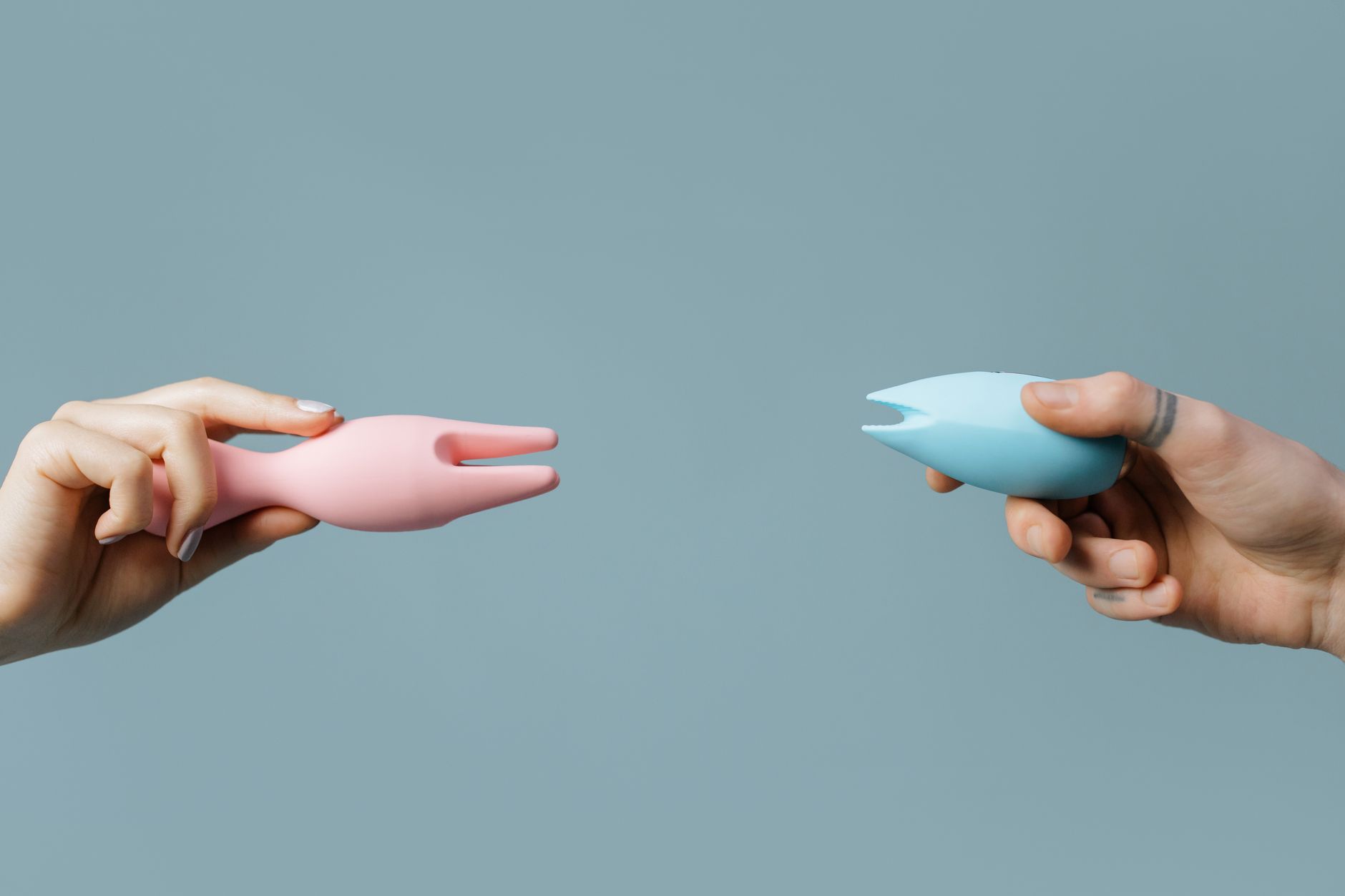
Photo by cottonbro studio on Pexels
The ovulation window. (This is where things get interesting.)
Right before ovulation, estrogen peaks. Then testosterone spikes. This is the most hormonally charged moment of your cycle. Your desire is at its highest. Your sensitivity is dialed up to maximum.
Ironically, this is also when your lemon clitoral vibrator might feel less necessary. Not because it doesn't work. Because your body is doing so much of the work already that you might orgasm faster than you expect. Some people use this window for partnered sex instead of solo play. Others use it intentionally to experience ultra-responsive orgasms with their toy.
What to adjust: If you're using a lemon sucker or other clitoral vibrator during ovulation, pay attention to your timing. You might come in half the time. That's not something to "improve." That's your body telling you something. Enjoy the efficiency. Use the intensity you'd normally dial in, but know you might hit the finish line faster.
The luteal phase. (The second half, where things slow down.)
Day 14ish through day 28, estrogen and testosterone both decline. Progesterone rises. Your nervous system shifts toward rest. Blood flow to your genitals decreases. Arousal takes longer to build.
This is where people often feel broken. They aren't. Their hormones just downshifted. The lemon vibrator that felt perfect last week now feels slightly numb. You need more time to warm up. You might need higher intensity, longer sessions, or both.
What to adjust: Budget more time. Add a longer warm-up. If you typically use your lemon clitoral vibrator for 8-10 minutes, you might need 15-20 during this phase. Use slightly higher intensity, but dial it in gradually. Your body will get there, just on its own timeline.
Menstruation itself. What actually works.
During bleeding, everything is tender. Your pelvic floor is sensitive. Cervical positioning might be lower than usual. Blood volume and hormones are both in flux.
For some people, orgasm during menstruation feels incredible. For others, penetration or direct clitoral pressure feels too intense. Both are completely normal. There's no right way.
If you use a lemon vibrator during your period, most people find that lower intensities and shorter sessions feel better. The suction mechanism of a lemon clitoral vibrator is gentler than vibration, which makes it a solid choice for this time. But pay attention to what your body wants. Some days that week you might crave pleasure. Other days you might not. Both are fine.
What to adjust: Start lower than you think you need. Your sensitivity is heightened. You have the option to stop anytime. Many people find that the week before their period (late luteal) is actually when they want stronger stimulation, not during the bleed itself.
How to track what's happening in your own body
Here's the practical part. Your cycle isn't anyone else's cycle. Start paying attention to three things over the next two months.
Arousal speed: How long does it take to feel turned on. Are you already halfway there, or do you need 15 minutes of buildup?
Intensity preference: What setting do you actually want on your lemon sucker or clitoral vibrator. Are you starting at pattern 1, pattern 3, or somewhere else?
Session length: How long do you want to go. Five minutes? Twenty? Does it vary week to week?
Write these down. A notes app works fine. You don't need a fancy tracker. After two full cycles, you'll start to see patterns emerge. Once you see the pattern, you stop fighting it. You work with it.

Photo by FounderTips . on Pexels
Stress, sleep, and cycle syncing aren't the same thing
One thing I want to name: your cycle doesn't exist in a vacuum. If you're stressed, not sleeping, or going through something emotionally heavy, your arousal will shift regardless of where you are in your cycle. A bad week can flatten desire. A fight with a partner can change everything. Burnout rewires your nervous system.
Cycle syncing is useful information, but it's not the whole picture. It's one layer of a much bigger system. If your lemon vibrator feels off, it might be hormones. It might also be that you need sleep, boundaries, or a conversation you've been avoiding.
If your cycle is irregular or nonexistent
If you don't menstruate, or your cycle is unpredictable due to hormonal contraception, menopause, PCOS, or anything else, this whole framework might not apply to you. That's completely okay. Your pleasure doesn't need to sync to a calendar. Pay attention to what feels good in real time. That's your actual data.
Some people using hormonal birth control find their arousal is flattened across the whole month. If that's you, <a href="/blog/how-to-use-lemon-vibrator-for-better-orgasms-with-medication-side-effects">using a lemon clitoral vibrator intentionally can help you reconnect with sensation</a>. Other people find that their cycle evens out and arousal becomes more predictable. Both happen.
The bigger picture: your body is trustworthy
One of the things I see most in my work with couples is that people have learned not to trust their bodies. They think arousal should feel the same every single time. That orgasm should be instant. That desire should never waver.
Your body is trying to tell you something. When your lemon sucker feels perfect one week and underwhelming the next, that's not a glitch. That's information. That's your nervous system, your hormones, your stress level, your sleep, and your emotional state all speaking at once.
The people who get the most out of their pleasure use that information. They adjust. They listen. They stop expecting their body to feel the same way every day and start noticing what it actually needs.
That's where real sexual satisfaction lives. Not in forcing your body to perform on schedule. In understanding how it actually works and working with it instead of against it.
FAQ
Does my cycle actually affect how well my lemon vibrator works?
Yes, but not because the vibrator changes. Your sensitivity, blood flow, and hormonal state shift throughout your cycle. The same lemon clitoral vibrator will feel different week to week because you're different week to week. Your body's responsiveness varies. That's the whole point. Once you recognize the pattern, you can adjust your intensity, timing, and expectations accordingly.
Can I use a lemon vibrator during my period?
Absolutely. Whether you want to depends entirely on you. During menstruation, many people find that lower intensity and shorter sessions feel better because sensitivity is heightened. The suction mechanism of a lemon sucker is often gentler than vibration, making it a good choice if you do want to use a toy during bleeding. Listen to what your body wants. Some days you'll crave it. Other days you won't. Both are normal.
Why does my lemon clitoral vibrator feel less responsive during the second half of my cycle?
During the luteal phase, estrogen and testosterone both decline while progesterone rises. This hormonal shift reduces blood flow to your genitals and slows arousal. You're not less sensitive. Your body is just operating on a slower timeline. You'll need longer warm-up, more time overall, and possibly slightly higher intensity. Budget 15-20 minutes instead of 8-10. Your body will absolutely get there.
Does hormonal birth control change how my cycle affects pleasure?
It can, depending on the method. Hormonal birth control flattens your cycle by preventing ovulation. Some people on hormonal contraception find their arousal is more consistent month to month. Others experience flattened desire overall. If you notice changes in how your lemon vibrator feels after starting birth control, that's the hormones talking. Give it 2-3 months to settle. If it doesn't improve and it bothers you, it's worth discussing with a doctor who can explore alternatives.
Should I track my cycle to optimize pleasure?
Tracking can be helpful, but only if it actually serves you. If you naturally notice week-to-week changes in your desire and arousal, jotting down a few notes can help you see patterns. If tracking feels like another chore or obligation, skip it. Your body will tell you what it needs in the moment. Pay attention to real-time signals instead of forcing a system that doesn't feel intuitive.
What if my cycle is irregular or I don't menstruate?
Cycle syncing isn't a one-size-fits-all framework. If your cycle is irregular, you use hormonal contraception, you're in menopause, or you have PCOS or any other variation, your arousal might not follow a monthly pattern at all. That's completely okay. Check in with what actually feels good right now instead of trying to predict it based on a calendar. Your body's real-time signals are more accurate than any framework.
The real pattern: pleasure is always changing
One last thing. I work with a lot of people who feel like their sexuality should be stable and predictable. It isn't. It's meant to change. It's supposed to respond to context, stress, emotions, and yes, hormones.
When you <a href="/blog/how-to-use-lemon-vibrator-when-you-are-new-to-toys">start exploring your pleasure with tools like a lemon vibrator</a>, you're actually learning to read your body's signals more clearly. You're becoming fluent in a language your culture told you not to speak. That fluency is what transforms pleasure. Not consistency. Attunement.
Your body knows what it needs. Your job is to listen and adjust. That's what actually works.