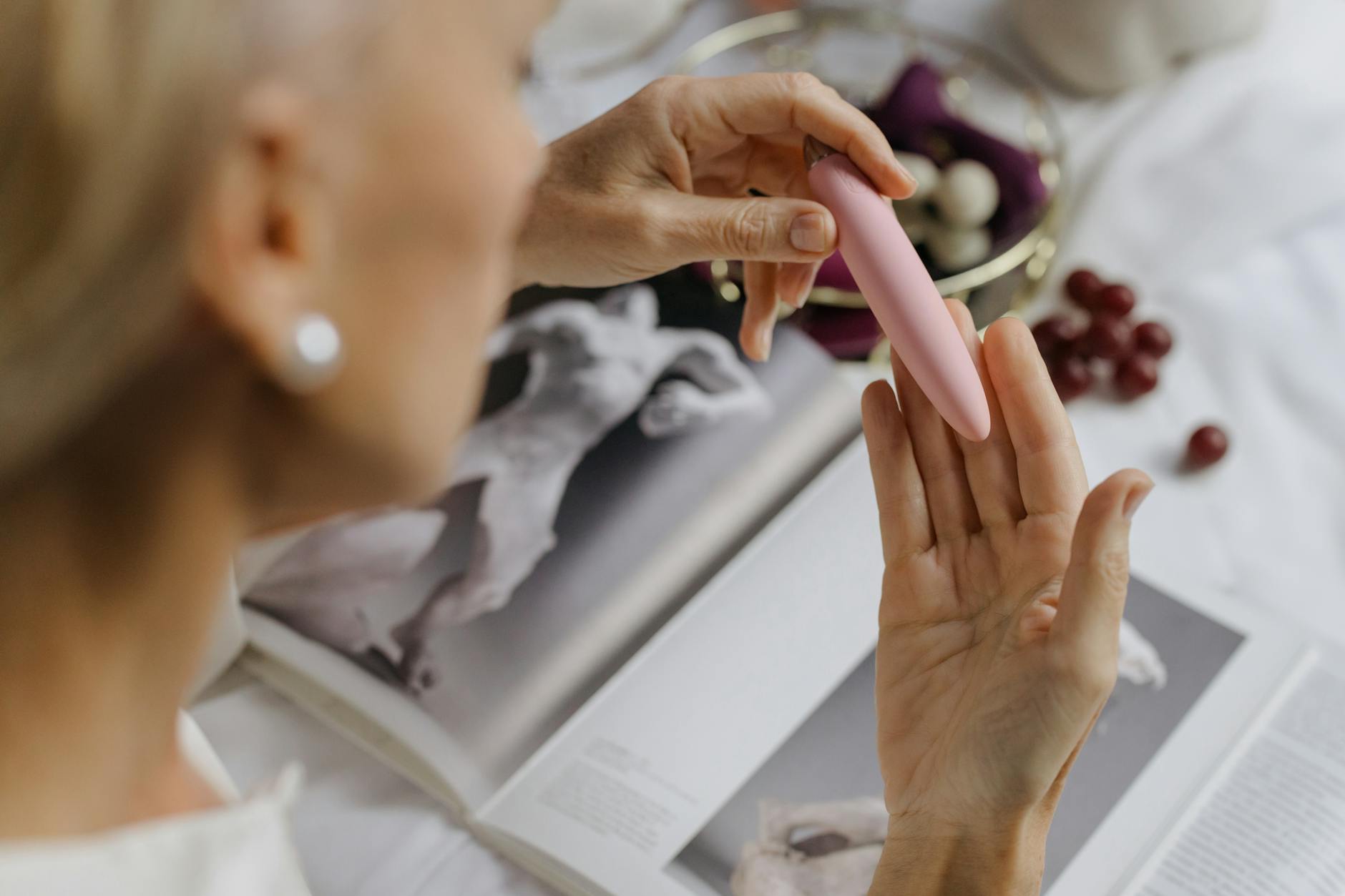
How to Use a Lemon Vibrator for Better Pleasure When Dealing With Hormonal Contraceptive Side Effects
Birth control flattens desire and sensation for many. A lemon clitoral vibrator isn't a fix—but it might be exactly what helps you feel like yourself again.
Hormonal contraceptives are genuinely brilliant at preventing pregnancy. What they're less honest about: they can flatten your sex drive and numb your sensation in ways that feel alarmingly permanent. You're not imagining it. Studies consistently show that 15—30% of people on hormonal birth control experience lowered libido, and another chunk report that orgasms feel muted or take longer to reach. The medication is doing its job. Your body is just collateral damage.
Here's the thing nobody mentions: a lemon clitoral vibrator, like the Lem, works differently than your finger or a partner's touch. The suction-based stimulation bypasses some of the dulled sensation that hormonal shifts create. I've worked with dozens of people who thought they'd lost their ability to orgasm while on the pill, patch, or implant. Most of them hadn't. They'd just needed a different kind of signal.
When you're on hormonal birth control, your estrogen and progesterone levels are either suppressed or kept artificially stable (depending on the method). This affects pleasure in three measurable ways.
First, blood flow to the clitoris decreases slightly. The tissue is the same—you're not broken—but arousal builds more slowly and reaches less intensity without external help. Second, the vaginal tissue itself becomes less elastic and produces less natural lubrication, which can make stimulation feel uncomfortable if you're expecting pre-birth-control levels of ease. Third, dopamine sensitivity in the brain can shift, meaning the reward signal from pleasure gets quieter. You can still feel good. It just takes more intentional input.
A lemon clitoral vibrator creates stimulation through rhythmic suction rather than direct vibration or friction. This matters because suction stimulates the nerve endings in a gentler, wider pattern than traditional vibrators. When sensation is muted by hormones, that broader signal actually reaches your nervous system more effectively.
Think of it like turning up the volume on a song you love but can barely hear. The song hasn't changed. Your ear just needs more amplitude to register it fully.
With suction-based clitoral vibrators, you're not relying solely on friction intensity. Instead, you're creating a pressure change that engages more of the clitoral complex, including the internal branches most people don't realize exist. For people on hormonal contraception, this approach often feels less effortful and reaches orgasm more reliably than traditional vibration alone.
If you're using a lemon clitoral vibrator and finding it isn't working the way you expected, the issue is usually not the toy. It's the setup.
Start with pattern one, not three. On hormonal contraception, your tissues are more delicate. Jumping straight to the highest intensity can feel overwhelming in a bad way, not a good way. Build gradually. Most people find patterns 2—4 hit the sweet spot once they've warmed up.
Use water-based lubricant, always. Birth control flattens natural lubrication production. Adding external lube isn't a failure. It's acknowledging the reality of your body right now. Water-based works best with silicone toys and rinses off easily.
Give yourself 20—30 minutes for arousal. Hormonal contraception lengthens the arousal phase. This isn't a bug. It's actual biology shifting the timeline. If you're rushing toward orgasm in five minutes, you're fighting your own chemistry. Slow down, let sensation build, let your brain catch up to what your body is doing.
Apply the suction to the clitoral hood, not directly on the glans. The glans (the tip) becomes more sensitive but also more irritable when on hormonal birth control. The hood, and the tissue around it, often responds better. You're not looking for the tightest seal. You're looking for comfort.
Two things that sound silly but actually matter: temperature and lube quality.
Warm lube (run the bottle under warm water for 20 seconds, or buy a warming variety) feels dramatically better than cold lube when your natural lubrication is compromised. Your body has less of its own slickness to work with, so the sensation of cold external lube can feel clinical rather than good.
Lube texture also changes how the lemon vibrator feels. Thick, slick lubes create better glide and pressure. Thin, runny lubes feel almost dry by comparison. If you're on hormonal contraception and standard water-based lube isn't hitting, try a thicker hybrid lube (water-silicone blend), which gives you more slip without stripping away sensation.
If you're using a lemon clitoral vibrator correctly and still feeling numb, the contraceptive method itself might be the limiting factor, not your technique.
Some hormonal contraceptives suppress sensation more than others. The implant and IUD deliver hormones directly to your system with high consistency. Some oral pills are more aggressive than others. If you've been on the same method for 6—12 months and sensation hasn't improved, it might be worth asking your doctor about switching formulations or dosages. This is a legitimate conversation. Your pleasure matters, and some methods genuinely suit your body better than others.
Also check medication interactions. Antidepressants, antihistamines, and blood pressure meds all layer on top of birth control's effects. If you've recently started something new and sensation tanked, that's worth mentioning to your provider.
Here's the part therapists actually care about: hormonal contraception can make you feel disconnected from your own body. You expect to feel something and don't. You try something that worked before and it falls flat. That emotional disconnection is real and matters more than the mechanics.
Using a lemon clitoral vibrator isn't just about the physical stimulation. For many people, it's a reset. Suction-based toys create a different kind of feeling than you've been chasing—less like the orgasms you remember, sometimes more intense, sometimes just different. That difference can feel fresh instead of lost.
Give yourself permission to relearn what feels good in your body right now, not what felt good before. Your nervous system is responding to the contraceptive. That's not a failing on your part. It's just information. A lemon vibrator helps you work with that information instead of fighting it.
If desire has vanished completely and isn't returning with tools or adjustments, your contraceptive might not be right for you. Some people need non-hormonal options. Some people do fine on hormonal methods but need a different formulation. Your provider has options. Use them.
If you're experiencing pain during sex (as opposed to just reduced sensation), stop using the lemon vibrator and see someone. Painful sex on hormonal contraception often points to other things—skin changes, infections, or hormonal imbalance that needs direct treatment.
If you've been trying for months and nothing is shifting, consider talking to a sex therapist alongside your GP. Sometimes the blocks are physical, sometimes they're psychological, often they're both. Having support matters.
No. The vibrator is external stimulation only. It doesn't interact with your birth control's mechanism. Use it freely without worrying it'll compromise contraception.
Some people notice a difference within one or two uses. Others take a few weeks of regular use to feel reconnected. Much of it depends on how much sensation has flatlined and whether you're adjusting your technique and lube as you go. Give yourself at least 2—3 weeks of consistent, unhurried exploration before deciding it's not working.
The Lem is designed for simplicity and soft suction, which many people on hormonal birth control find more comfortable than high-intensity options. But comfort is personal. If you're sensitive right now, start with gentler suction patterns and build up only if you want more. You don't have to chase intensity.
There's no rule here. Some people find that weekly or twice-weekly use helps their body remember what pleasure feels like. Others prefer less frequent use. What matters is that it feels good and doesn't become pressure or obligation. If using the vibrator starts to feel like homework, you've lost the point.
If you're trying to get pregnant, you'd typically stop hormonal contraception first (working with your doctor). Once you're off it, sensation usually returns within a few cycles. A lemon vibrator can absolutely help during that transition. If you're pregnant, external stimulation is usually fine, but check with your midwife or OB about your specific situation.
That's a real response, especially in the first few tries. Your tissue might be reactive to suction at certain intensities. Start at pattern one, use plenty of lube, keep sessions short (5—10 minutes), and give yourself breaks between uses. Sometimes sensitivity normalizes once your body realizes the vibrator isn't a threat. If it doesn't improve in 2—3 weeks, try a different type of stimulation entirely. Not every toy works for every body, and that's completely okay.
Hormonal birth control flattens pleasure for many people. That's not a moral failing. It's chemistry. A lemon clitoral vibrator works for many people in this situation because suction-based stimulation reaches your nervous system differently than friction or traditional vibration does. It's a tool, not a solution, but the right tool can make a real difference in reclaiming sensation and confidence in your body.
If you're feeling disconnected from pleasure because of contraception, you're not alone, and adjusting your approach is worth your time. Your pleasure matters. It deserves attention, good tools, and patience as your body adapts.