Here's what nobody warns you about when they prescribe anxiety meds
Your therapist tells you the SSRI will help with panic attacks. Your doctor promises it's safe, effective, nausea will fade in a week. But nobody mentions that it might also make orgasms feel like trying to reach something underwater. That arousal will take twice as long to build. That you'll feel sensation the way you feel background music at a restaurant. It's there, technically, but you're not really experiencing it.
And then you feel broken, because the medication is working. You feel calmer. Your anxiety is actually manageable now. So why does sex feel like nothing?
What SSRIs actually do to your nervous system
SSRIs work by keeping serotonin in your brain longer. That's great for anxiety. But serotonin also regulates blood flow, muscle tension, and the whole cascade of events that builds arousal. Higher serotonin = calmer nervous system. Calmer nervous system = lower sexual response.
There's also dopamine involved. Dopamine is the desire chemical. SSRIs can lower dopamine a little, which makes the wanting part quieter.
And then there's the genital bloodflow piece. Most SSRIs slightly reduce bloodflow to genitals, which means less engorgement, slower arousal, and for some people, the sensation of numbness or distance from their own body.
This is not psychosomatic. This is not "in your head." This is biochemistry.
Why it's not permanent
First, your body does adapt. Most SSRI-related sexual side effects plateau around week 6. Some people notice improvement naturally over months. That's not a guarantee, but it's real and it happens often.
Second, there are actual interventions that work. This is not a "just accept it" situation.
How a lemon vibrator changes the equation
A clitoral vibrator like the Lem works because it bypasses the slow-build problem. Instead of waiting for your nervous system to gradually increase bloodflow and sensation, you're introducing external vibration that triggers the nerves directly.
Wand vibrators can feel too intense when you're already numb. They can actually hurt because you're forcing sensation into tissues that aren't ready. A lemon clitoral vibrator uses suction instead of direct vibration. Suction stimulates the same nerves without the friction or pressure that can feel punishing when your baseline sensation is already dampened.
The result: you feel something. Real, present pleasure. Not "thinking about pleasure." Actual sensation.
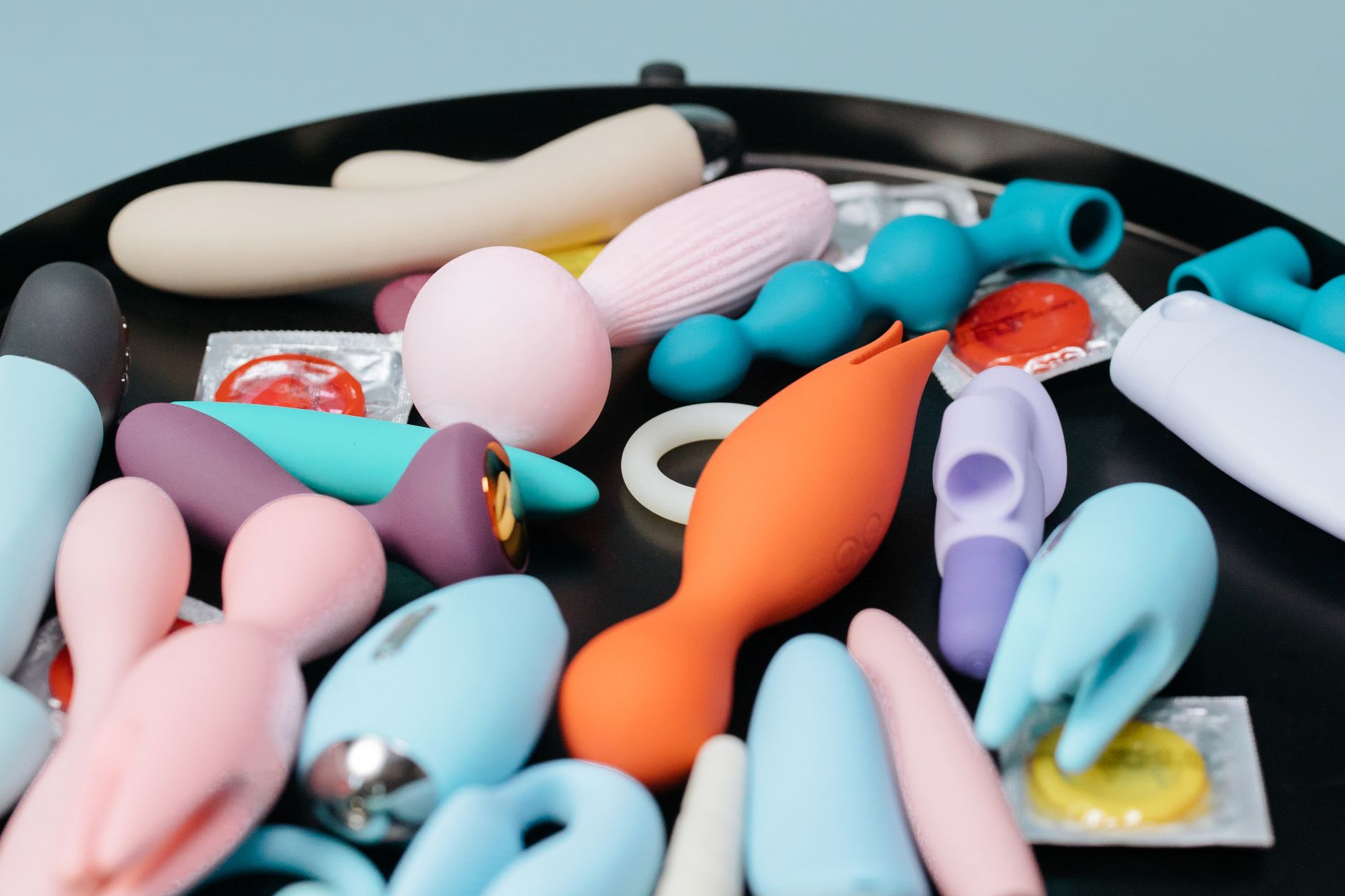
Photo by cottonbro studio on Pexels
The practical setup that works
When you're on SSRIs and exploring with a clitoral vibrator, timing and preparation matter more than usual.
Start with warm-up. Your nervous system is already calmer than baseline. Budget 20-30 minutes before you even touch yourself, and spend that time on things that typically get you interested. Read something. Watch something. Talk to your partner. Basically, work your brain because your genitals are on a slight delay.
Use lubrication generously. SSRIs can lower natural lubrication a little. Water-based lube is not optional here, it's essential. It creates the glide that lets sensation register properly. Without it, you might feel pressure instead of pleasure.
Start at the lowest setting. Don't jump to pattern 5 on the Lem because you think you need "more" to feel something. Start at pattern 1. Give yourself 2-3 minutes per pattern before you increase. Your nervous system is slow-moving right now. Let it catch up.
Focus on consistency, not intensity. The goal is not to go harder. It's to stay steady long enough for the sensation to build and for your brain to register it as pleasure instead of pressure.
When to consider a medication adjustment
If you've been on the SSRI for 8+ weeks and sexual sensation hasn't improved, talk to your prescriber. This is not something you have to accept. Options include:
Lowering the dose slightly (sometimes a 25% drop solves it without affecting anxiety control). Switching to a different SSRI (some have lower sexual side effects). Adding something like bupropion, which actually increases dopamine and can counteract the libido dampening. Taking a "drug holiday" if your anxiety is stable (not recommended for everyone, but worth discussing).
Importantly, don't just stop taking the medication. That's unsafe and usually backfires. But working with your prescriber on solutions is always reasonable.
The partner conversation you need to have
If you have a partner, they need context. "I'm taking medication for anxiety, and it's changing how my body responds sexually right now" is a complete sentence. You don't owe them a detailed neurology lecture.
What you might say: "My arousal is slower now and sensation is lighter. It's not you, it's the medication. I'm using tools to help me feel more, and it's actually working." Then show them. Use the Lem alone first, figure out what pattern and duration actually feels good, and then integrate it with your partner if you want to.
Many partners worry that the muted response means their partner is less attracted to them. It doesn't. But they'll worry anyway if you don't name it directly.
The physical technique that works best
When you're on SSRIs and using a lemon clitoral vibrator, the angle and positioning matter more than they normally do.
Your clitoris is not directly at the surface of your vulva. It's internal, and the most sensitive part (the glans) sits underneath the clitoral hood. With reduced sensation, you need to be more precise about where the vibration hits.
Try starting with the Lem positioned slightly above center, angling toward your body at about 45 degrees. This tends to hit the clitoral glans more directly than pointing straight down. You might also find that gentle rocking motion (moving the Lem slowly while keeping it on the same setting) feels better than staying perfectly still.
Experiment. What works for someone else might not work for you. The point is: micro-adjustments matter when your baseline sensation is lower.
How long before you notice a difference
If you're using a lemon clitoral vibrator consistently, you might feel more sensation in your first session. That's the suction working. But the real change, where pleasure feels genuinely alive again, often takes 3-5 sessions to build. Your brain is learning to feel sensation again, and that takes repetition.
Also, many people find that as they use the vibrator regularly, their baseline sensation improves even without it. Like you're training your nervous system back to responsiveness. This is a real clinical observation, not a hope statement.
FAQ: Anxiety Meds and Pleasure
Can I switch anxiety medications to preserve my sex life?
Yes, sometimes. Some SSRIs and other anxiety meds have fewer sexual side effects than others. Buspirone, for example, has minimal sexual impact. But switching meds is a doctor conversation, not something to do on your own. Your current medication might be the one that actually works for your anxiety, and losing that control is worse than managing sexual response. Work with your prescriber to evaluate options.
Does the numbness go away permanently once my body adjusts?
Often, yes. Most sexual side effects from SSRIs stabilize or improve by 8-12 weeks as your body adapts. But not for everyone. If it doesn't improve naturally, medication adjustment or adding a tool like a lemon clitoral vibrator can make a real difference. You have options.
Will using a vibrator make my body depend on it?
No. Your nervous system won't become "addicted" to vibration. In fact, many people find that using a vibrator regularly helps restore baseline sensitivity because you're actively stimulating those nerves. It's like physical therapy for sensation.
Is it okay to use a clitoral vibrator while on SSRIs with a partner?
Completely fine. Integrating a tool into partnered sex is straightforward once you've used it alone and know what feels good. The Lem works beautifully in partnered scenarios because it doesn't require penetration. You or your partner can hold it. Plenty of couples find that introducing a vibrator actually deepens intimacy because the focus is on mutual pleasure, not performance.
Can I take anything alongside my SSRI to boost sexual response?
Depends on the medication. Some people add bupropion (Wellbutrin) specifically for sexual side effects. Others find that a lower dose works just as well for anxiety without flattening pleasure. This is always a prescriber conversation. Supplements or over-the-counter products aren't reliable here. Your doctor needs to know what you're trying.
Should I tell my doctor I'm using a vibrator?
Yes, if they ask about sexual function. You don't need to volunteer details, but if they're asking about medication side effects, saying "I'm using a clitoral vibrator to help with sensation and it's making a difference" is honest information that can actually inform their prescribing decisions. Good doctors want to know what's working.
The actual truth
Anxiety medication is a trade. You get calm in exchange for some reduced sensation. That's the deal. But "reduced" is not "gone." It's not permanent unless you need it to be. And most importantly, it's solvable.
Using a lemon clitoral vibrator isn't a workaround for broken medication. It's a tool that meets your body where it actually is right now. Your pleasure matters. Your anxiety management matters. They're not in competition, even though it feels that way sometimes.
If you want to explore how the Lem actually works with your body and your medication, start solo. That's where you figure out what settings and techniques give you real sensation back. Then decide what you want to do from there.
Your nervous system adapted to the medication. It can adapt to pleasure too.