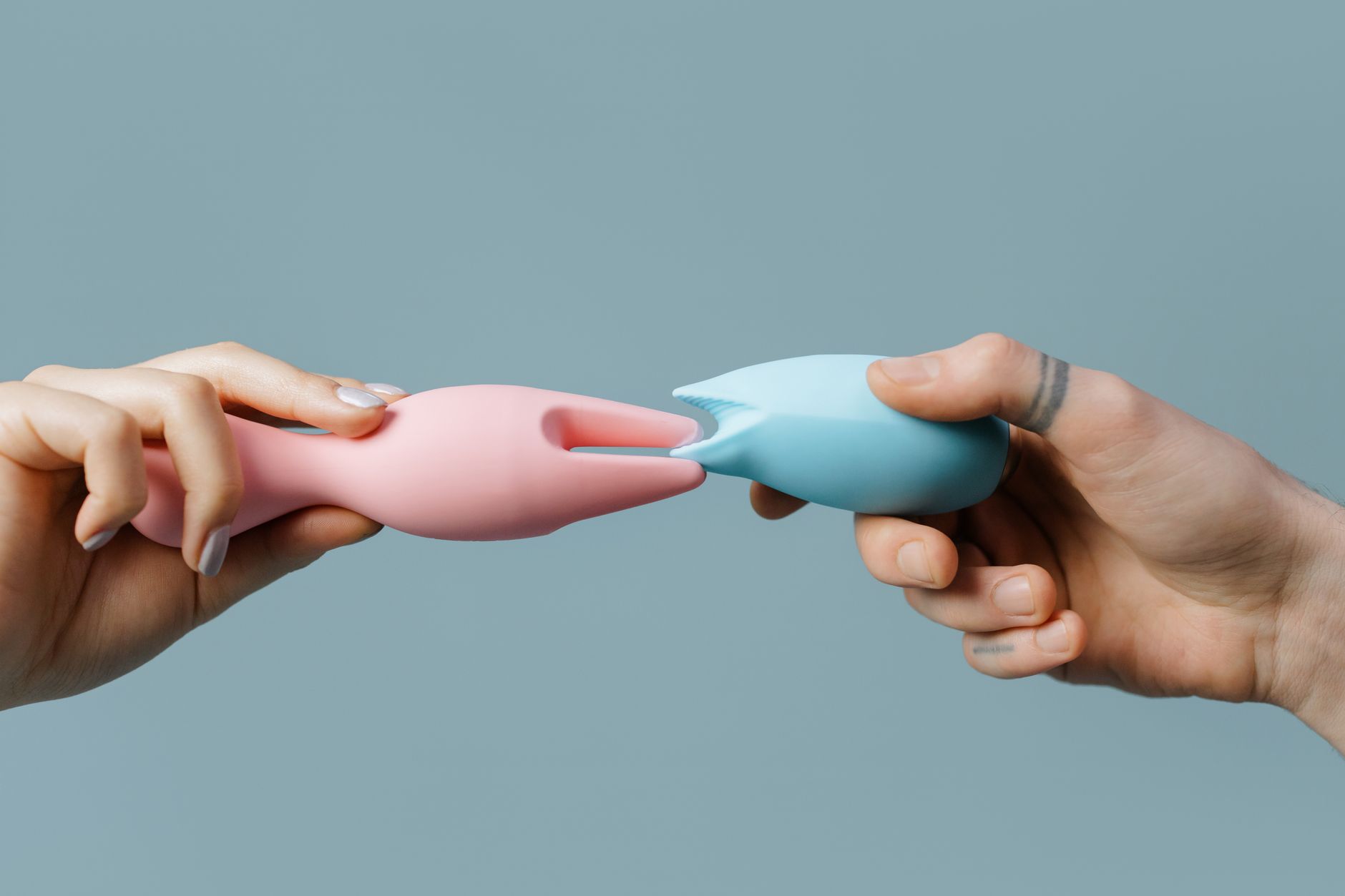
Here's what nobody tells you about low sex drive
Your desire didn't disappear because you're broken. It went quiet because something in your life, your body, or your relationship shifted. That's the distinction that matters. Low libido is not a character flaw. It's information.
And once you understand what's actually happening, a tool like the lemon vibrator changes everything. Not because it magically restores desire, but because it gives your body permission to remember what pleasure feels like without the pressure of performance.
What actually causes low sex drive
The reasons are rarely just one thing. They stack. Stress and chronic fatigue suppress dopamine and testosterone. Anxiety wraps itself around desire and strangles it slowly. Depression flattens everything, including arousal. Life events. Relationship tension. Hormonal shifts. Medication side effects. Past trauma that hasn't been processed.
Many of my clients come to me convinced they've lost desire permanently. What I find instead is that desire is buried under layers of practical exhaustion, unresolved conflict, or disconnection from their own body. The lemon vibrator isn't therapy, but it can be the bridge back.
Here's the counterintuitive part. When you're dealing with low libido, the worst thing you can do is pressure yourself into sex. That pressure creates resistance. Resistance becomes resentment. And resentment kills any chance of desire returning naturally.
Why a lemon vibrator works differently than partnered sex when desire is low
Think of it this way. Sex with a partner carries expectation. You're performing, worrying about their experience, monitoring your own response. That's exhausting when your tank is already empty.
A lemon clitoral vibrator removes that script. It's just you and sensation. No one's watching. No one's waiting. You don't have to perform or worry about finishing or whether you're taking too long. You can simply notice what feels good without judgment.
The other reason the lem vibrator is particularly helpful for low desire is the technology itself. Suction-based stimulation doesn't require the same intensity of arousal that penetration does. You can start with lower intensity and build gradually. Your nervous system doesn't have to fight against pressure to feel something.
The three-step approach to reconnecting
Step one. Release the goal of orgasm. I know that sounds counterintuitive, but it's crucial. When libido is low, chasing climax creates more pressure, not less. Instead, commit to sensation exploration. Set aside 15 minutes with no agenda except to notice what feels neutral, pleasant, or interesting. Not good or bad. Just notice.
Start with the lemon vibrator on its lowest setting. This usually feels less intense than you'd expect. Let it build slowly. Most people find that when they stop chasing the orgasm, it arrives more easily anyway.
Step two. Track what actually helps. Does sensation feel better after movement? After you've been alone for a bit? At a certain time of day? After you've had a conversation that left you feeling heard? Write it down. These patterns tell you what your desire actually needs.
I had a client whose libido was practically extinct. Turns out she needed 20 minutes of physical activity before sex felt remotely appealing. Once she connected those dots, she could prepare. The lemon vibrator became her reset tool after a run.
Step three. Build micro-rituals around pleasure. Low desire thrives in chaos and absence. A simple ritual tells your brain that pleasure matters again. Maybe it's lighting a candle, putting your phone in another room, and spending 10 minutes with a lemon vibrator. Or a bath, then 15 minutes of exploration. The ritual isn't about luxury. It's about telling yourself that this time is protected and intentional.
Photo by FounderTips . on Pexels
When low desire is happening in a relationship
If you have a partner, this deserves its own conversation. And I mean a real conversation, not a negotiation or an apology.
You might say something like this: "My desire has been low, and I'm working on understanding why. It's not about you. But I need us to remove sex from our expectation list for a while. Instead, I'm going to explore my own pleasure and reconnect with my body. I'll keep you in the loop, but I need you to trust the process."
That's vulnerable and clear. It removes the assumption that low libido means you don't want your partner. It signals that you're taking it seriously.
Many partners feel rejected when desire drops. It helps to name that directly. Something like: "I know this feels personal. I want you to know it isn't. But I also can't perform to make you feel wanted. What I need is patience." That's honest without being cruel.
If your partner won't accept that boundary, that's different information. And it might be worth exploring with a couples therapist.
Using the lemon vibrator when you're starting from zero
If sex has felt completely off the table, the transition back can feel scary. Here's how I usually recommend starting.
Week one and two. Just hold the lemon vibrator. Don't turn it on. Let your body get used to having it. That sounds simple, but when you're carrying shame or disconnection around pleasure, even this step matters.
Week three. Turn it on for 30 seconds on the lowest setting. You're not trying for anything. You're just noticing. Does it feel cold? Smooth? Weird? All of those are fine answers.
Week four. Extend it to two to three minutes if something's shifted. If it hasn't, stay here. There's no rush.
This slow expansion gives your nervous system time to settle. You're not forcing desire. You're creating the conditions where it can naturally return.
The medication and hormone piece
Some people's low libido has a clear biological root. Antidepressants, hormonal birth control, thyroid issues. If that's you, a lemon clitoral vibrator still helps, but you might also need medical support.
I recommend asking your doctor directly: Is this medication known to affect libido? If yes, are there alternatives? Sometimes switching a class of antidepressant or adjusting dose makes a real difference. Sometimes it doesn't. But the conversation is worth having.
If you're on hormonal birth control and desire has tanked, that's also worth exploring. Progesterone-heavy methods suppress testosterone in some people. The copper IUD doesn't, for example. Again, not a quick fix, but information you deserve to have.
A lemon vibrator works with whatever's happening hormonally, but it doesn't replace medical conversation.
When to reach out for actual support
If low desire has been persistent for more than three months and isn't improving even with exploration and boundary-setting, that's a moment to bring in someone trained. A sex therapist or relationship therapist can help you untangle whether this is about your body, your mind, your relationship, or some combination.
You don't have to figure this out alone. And sometimes desire needs more than a tool. It needs professional perspective.
FAQ
How long does it usually take for desire to come back when you're using a lemon vibrator?
There's no standard timeline. I've had clients feel a shift within two weeks of consistent exploration. Others take two months. The key isn't speed. It's consistency and removing pressure. Desire tends to return when you stop chasing it and start creating space for it. A lemon clitoral vibrator makes that space feel safer because there's no performance involved.
Can low sex drive be a sign of something serious I should know about?
It can be. Low desire that appears suddenly, especially alongside other changes like exhaustion, mood shifts, or physical symptoms, is worth mentioning to your doctor. But most low libido in relationships comes from stress, disconnection, or life circumstances, not serious illness. That said, thyroid dysfunction, depression, and hormonal imbalances are common and treatable causes worth ruling out.
Is using a lemon vibrator cheating if I'm in a relationship?
No. Exploring your own pleasure solo is not infidelity. It's self-knowledge. I've actually found that when people using lemon vibrators reconnect with their own desire, their partnered sex often improves too. You can't bring desire to someone else if you've completely lost touch with your own body.
What if I use a lemon vibrator and still don't feel anything?
Then you're gathering information. Numbness is also data. It might mean you need more time. It might mean you need to talk to a therapist about trauma or depression. It might mean the setting is too intense and you need to dial it down more. The vibrator isn't failing. It's helping you understand what your body actually needs.
Can I use a lemon vibrator with my partner if my desire is low?
Yes, and many couples find this helpful. It removes performance pressure because the vibrator is doing the work, not your partner. You can both notice pleasure without the usual scripts. That said, introduce it in a conversation, not a surprise. Something like: "I've been exploring solo, and I'm curious if we could use this together sometimes." That invitation is very different from springing a toy on someone.
How do I know if my low desire is about the relationship or about me?
That's the essential question. Here's a quick check: Does your desire return when you're alone and exploring? If yes, that's information that something about the dynamic needs attention. If desire stays low across all contexts, it's likely about your body or mind, not the relationship. Either way, you deserve support in figuring it out.
The real truth about low libido
Dire has a way of returning when you stop treating it like a problem to solve and start treating it like a signal to listen to. A lemon vibrator isn't a magic fix. It's a tool that helps you practice reconnection without the weight of performance.
Your body hasn't forgotten how to want things. It's just quiet right now. And quiet can become whisper. Whisper can become voice. A lemon clitoral vibrator gives you a safe way to listen.
If low desire is weighing on you and you're ready to explore what might help, reach out. We can talk through what you're experiencing and map out next steps that actually fit your life.