Let's be real about aging and sexual confidence
Somewhere between your thirties and your forties, the culture shifts the story. Suddenly you're no longer the desirable protagonist. You become, in the language of magazines and TikTok, "aging." As if sexuality has an expiration date stamped on it like milk.
Here's what I've observed in two decades of working with couples: that narrative is almost entirely fiction. What changes is not your capacity for pleasure or your right to desire. What changes is how much permission you give yourself to want it.
Why confidence takes a hit in the first place
It's not just vanity. Four specific things are happening simultaneously.
First, the visibility problem. If you've spent decades absorbing cultural messaging that desirability peaks at twenty-five, you're now living in a body the culture has deemed less worthy of attention. You see fewer people who look like you in sexual or sensual contexts. You're not seeing pleasure modeled for bodies at your stage of life. So you start to internalize the idea that maybe you shouldn't be having as much pleasure, or wanting it as much. That's not your actual body talking. That's the culture speaking through you.
Second, the relationship rut. Long-term partnerships often hit a plateau around the fifteen to twenty-year mark. If sex was already feeling routine or obligatory, aging compounds it. You stop initiating not because you've lost desire, but because the rejection risk feels higher. So you wait for your partner to make the first move. They're waiting too. Nobody moves. Months pass.
Third, the physical changes. Your body does change with age. Lubrication shifts, arousal might take longer, recovery time changes. If you're not expecting these shifts, you misinterpret them as failure. Your body doesn't work the way it used to, you think. Except that's only half true. Your body works differently. Not worse. Different.
Fourth, the identity fracture. You're not twenty anymore. You might be a parent, a professional, a caregiver. You've built an entire identity around being capable, competent, in control. Pleasure requires the opposite. It requires letting go, vulnerability, not knowing what's going to happen. That's terrifying when you've spent two decades perfecting the performance of having it all figured out.
What actually happens to sexual pleasure as you age
I need to separate the real from the story here because the story is costing you.
What changes: your cardiovascular response. Arousal takes longer. Orgasm might feel different. Vaginal or penile tissues respond differently to stimulation. If you've been through significant life stress, grief, or hormonal shifts, the wiring for pleasure can feel a bit muted.
What does NOT change: your capacity to feel pleasure, your right to want it, your ability to orgasm, or your worth as a sexual partner. Your clitoris has the same nerve density it always did. Your brain is just as capable of pleasure. You haven't lost anything. You've just been told a story that you have.
Here's the data twist that no one talks about: many people report their most satisfying sexual experiences happen in their forties, fifties, and sixties. Not because their bodies improved. Because their minds finally stopped running interference. Because they stopped performing for an audience and started actually feeling what they felt. Because they got tired of the story and decided to write a different one.
Why a lemon vibrator changes the confidence equation
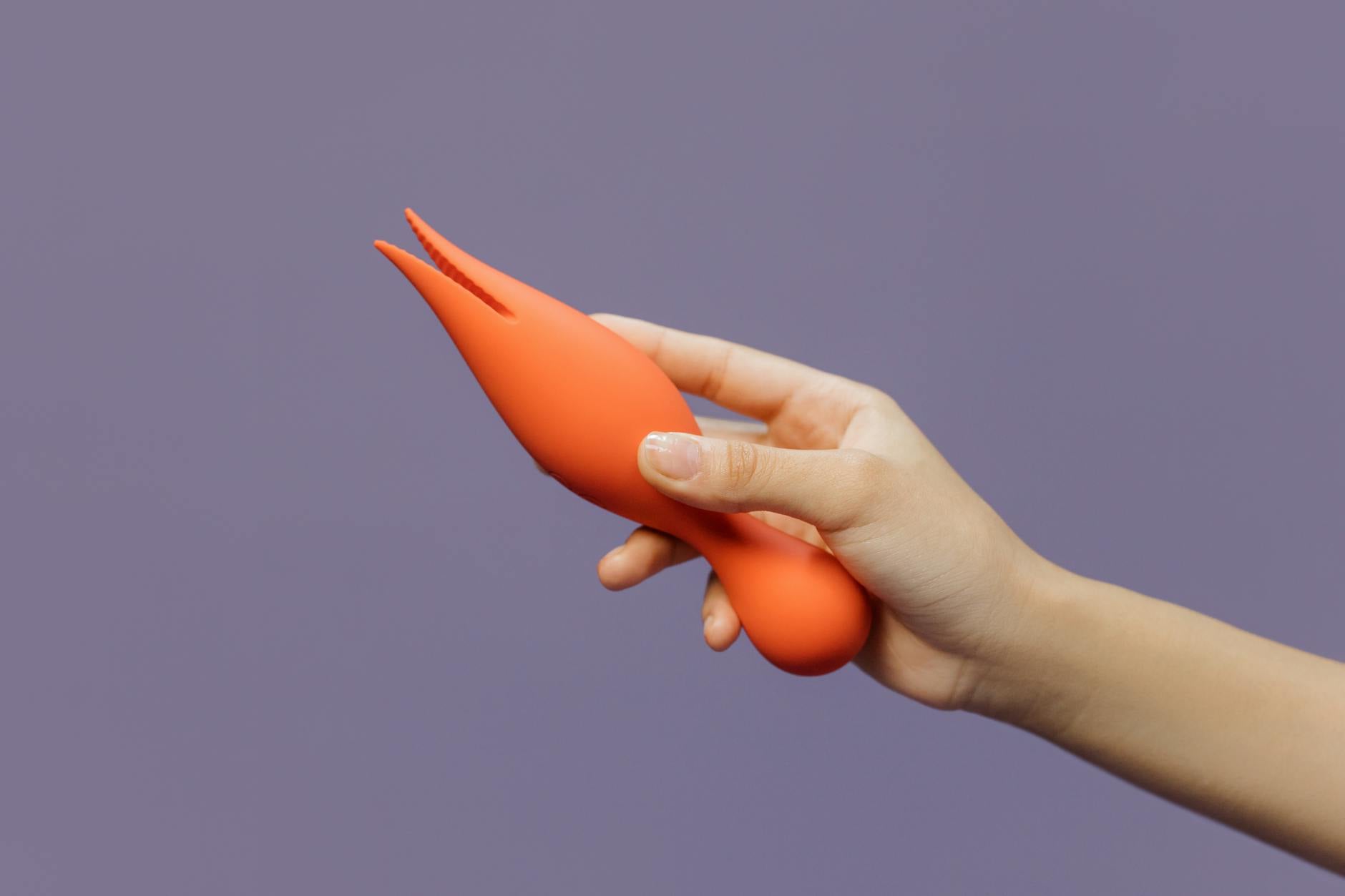
A clitoral vibrator like the Lem does three things that directly address aging-related anxiety.
First: it depersonalizes pleasure. When you're worried about your body's response or your partner's judgment, self-consciousness is the enemy. A lemon vibrator creates a clear boundary. This is a tool. It has a job. You're not trying to perform sexual arousal anymore. You're experimenting. That shift from performance to play changes everything.
Second: it neutralizes the comparison trap. You're not stacking your body against twenty-year-old versions of yourself anymore. You're experimenting with what feels good right now. On a clitoral vibrator, you're discovering your pleasure as it is, not mourning your pleasure as it was. That's genuinely different work.
Third: it accelerates arousal. If your concern is that arousal takes longer, a vibrator removes the waiting period entirely. You're not spending twenty minutes wondering if your body is going to cooperate. You're spending three to five minutes exploring patterns until something lands. That's not cheating. That's being smart about your time and your anxiety.
The lem vibrator specifically works well here because suction-based stimulation feels less raw or intense than direct vibration on thinner tissue. It's gentler entry point into solo play if you've been away from pleasure for a while.
How to actually start using a clitoral vibrator when confidence is low
Three stages.
Stage one: alone, no pressure. Use the vibrator solo, with no expectation of orgasm or any specific outcome. The only goal is to notice sensation. What pattern feels good? What intensity? Where? This is information gathering, not performance. Give yourself fifteen to twenty minutes minimum. Your brain is still waiting for the performance anxiety. It takes time to quiet that.
Stage two: alone, with permission. You're not gathering information anymore. You're giving yourself permission to prioritize your own pleasure. This looks the same but feels different. You're not thinking about whether this counts as "real" sex or whether you're wasting time. You're saying: my pleasure matters. This is how I'm spending this time. That's a radical thing to say if you've spent decades putting everyone else's pleasure first.
Stage three: integrated into partnered sex (if relevant). This is where the confidence shift really shows up. You're not asking permission anymore. You're not waiting for your partner to initiate. You're saying: I want to use my vibrator. You can watch, join, or give me space. This isn't a rejection of your partner. It's a declaration that your pleasure is non-negotiable. Partners who love you will find this hot. Partners who feel threatened by it are showing you important information about the relationship dynamic.
The shift from anxiety to confidence often happens in stage two. When you stop waiting for external validation and start giving yourself permission. The vibrator is just the physical tool. The real tool is you deciding that your sexuality hasn't expired.
The mental shift that matters most
Using a clitoral vibrator when you're anxious about aging isn't really about the vibrator. It's about calling bullshit on a story that no longer serves you.
Your sexual desirability is not declining. It's being actively erased by a culture that profits from your insecurity. Your pleasure is not less valid at forty or fifty or sixty. It might just be less visible. Your body works differently than it did at twenty. That's not failure. That's evolution.
The Lem or any lemon vibrator is a tool that says: I'm going to experience pleasure on my own terms. Not when the culture says I should. Not in the way I'm supposed to. Not in the context that's acceptable. But now. In whatever way feels good. That's not desperation. That's radical self-respect.
If partnered sex matters to you, the confidence you build in stage two directly translates. Your partner feels the difference immediately. When you stop apologizing for wanting pleasure and start claiming it, the entire dynamic shifts.
Maybe your best sexual years actually are ahead. Maybe the reason you haven't discovered them yet isn't biology. It's permission. A vibrator can help you give yourself that permission. But the real work is you deciding that aging is not a deadline for pleasure. It's the middle chapter. And you get to write what happens next.
People also ask
Is it normal to feel self-conscious using a vibrator at my age?
Completely normal. You've been absorbing cultural messaging your entire life that sexuality should look a certain way and peak at a certain age. Self-consciousness isn't a sign that you're doing something wrong. It's a sign that you're challenging a story you've carried for decades. That discomfort usually fades once you realize that pleasure at any age is an act of self-respect, not desperation. The lemon vibrators from Hello Nancy's are designed to make experimentation feel natural and accessible, which can help ease that initial anxiety.
Does using a vibrator mean something is wrong with my sexual function?
No. Using a vibrator means you're making a choice about how you want to spend your time and what kind of pleasure matters to you. People at every age and stage of sexual function use vibrators. They're not a workaround for broken bodies. They're a tool for pleasure, just like a book is a tool for stories. You don't use a book because reading is broken. You use it because you want the experience.
What if my partner feels threatened by my using a vibrator?
That's important information about your partner, not about you. A partner's insecurity about toys is about their own confidence, not about your desire. If this matters to you, that's a conversation worth having. You might start by asking what the threat feels like to them. Often it's not about the vibrator. It's about fear that you'll want them less, or that you'll leave, or that they're not enough. That's real, and it's worth addressing. But it's not a reason to give up your own pleasure. Your sexuality is non-negotiable.
Can using a lemon clitoral vibrator help me rebuild desire after years without sex?
Yes, but in a specific way. A vibrator won't force desire if it's genuinely absent. But it can help you reconnect with sensation in a low-pressure way. Often what looks like absent desire is actually absent permission. You've decided it's not for you anymore, so you've stopped noticing the signals. A vibrator can help you notice again. That's powerful.
How long does it take to feel confident using a vibrator when you're anxious about aging?
The physical adjustment usually happens in three to five sessions. You learn what feels good, what patterns work, what intensity you prefer. The mental adjustment takes longer. You're rewiring beliefs you've held for decades. Most people report a significant confidence shift within two to three weeks of regular solo exploration. But the real transformation is ongoing. Every time you choose pleasure, you're choosing to reject the aging narrative. That compounds.
Is a lemon vibrator comfortable if I have sensitive tissue or dryness?
The suction-based stimulation from a clitoral vibrator like the Lem is gentler than direct vibration, which makes it a good option for sensitive tissue. For dryness, a small amount of water-based lubricant helps. The lemon suction design also means you're not relying on direct friction, which some people find too intense as tissues change with age. That said, everyone's comfort is different. Starting at the lowest setting and building up is always the right approach.