Let's talk about the timing thing
Introducing a lemon vibrator early in a new relationship carries weight. You're not just mentioning a toy. You're signaling vulnerability, desire, and an invitation to explore together. If you're feeling nervous about it, that's the right signal. It means you're thinking about this seriously instead of rushing it.
Here's what actually happens in new relationships when pleasure stays hidden: you build a sexual script without negotiation. Six months in, you're both performing versions of sex that feel safe but not quite true. A lemon clitoral vibrator, introduced with intention, short-circuits that pattern. It says, from the beginning, that your pleasure matters and that talking about it is normal.
Why the first months are actually the best time
Counterintuitive, but true. In the first three to six months, curiosity is still higher than judgment. Your partner is actively discovering what turns you on. They're paying attention. They want to impress you. This is the exact moment when introducing a tool feels less like a correction ("I need this to finish") and more like an invitation ("I want to share this with you").
Nearly 60% of people who've introduced toys early in relationships report better overall sexual communication later on. You've already normalized talking about logistics, preferences, and what actually feels good. That becomes the default language between you.
The conversation before the bedroom
Don't introduce the Lem or any lemon vibrator during sex. That's the fastest way to make it feel like a surprise plot twist instead of something mutually chosen. Instead, pick a moment outside the bedroom when you're both relaxed. Not right before bed when you're both tired. Not during an argument. Maybe over coffee, or a walk, or any moment when you're actually present with each other.
Start simple. You don't need a manifesto. "I've been thinking about exploring more during sex, and there's this toy I'm interested in trying with you. Can we talk about it?" That's the whole opener. You've named the desire, named the specific tool, and asked permission to discuss it.
Then listen. Your partner might say yes immediately. They might have questions. They might feel insecure ("Do I not turn you on enough?"). That's worth addressing head-on. "I'm turned on by you. This isn't about you. It's about deepening what we already have." Clinical, clear, not defensive.
What to expect from the first time
Your partner might feel awkward. You might feel self-conscious. That's normal and it passes in about two minutes once things get going.
Start with foreplay before introducing the lemon vibrator. Build arousal together naturally first. When you're ready, hand the Lem or another clitoral vibrator to your partner rather than using it yourself immediately. This distributes the psychological weight. They're not watching you use it. They're participating in using it on you. That subtle shift changes everything about the dynamic.
Start on the lowest setting. Let them explore where feels good. You guide with your voice: "A little lower," "Stay right there," "I like that pressure." This is you teaching them your body, which is insanely intimate and also practical. They learn what you actually need.
Don't expect a mind-blowing orgasm the first time. Expect that it feels different from your usual rhythm. Some people find that thrilling. Some find it takes a few sessions to relax into. Both are fine.
The psychological piece nobody talks about
When you introduce pleasure tools early, you're also introducing the idea that desire is collaborative, not spontaneous. In long-term relationships, this is huge. You're building a foundation where "Let's try something" is safe language. Where admitting what you actually want doesn't feel like criticism.
I've worked with couples who waited years to have this conversation, and they often describe it as liberation. But you get there faster by starting here.
Your partner might worry that using a lemon clitoral vibrator means they're not enough. Address that directly, not by reassuring them endlessly (which paradoxically confirms their insecurity), but by being matter-of-fact: "Your body and a toy are two different things. I like both. That's not complicated." Then move forward.
How to use the Lem as a couple
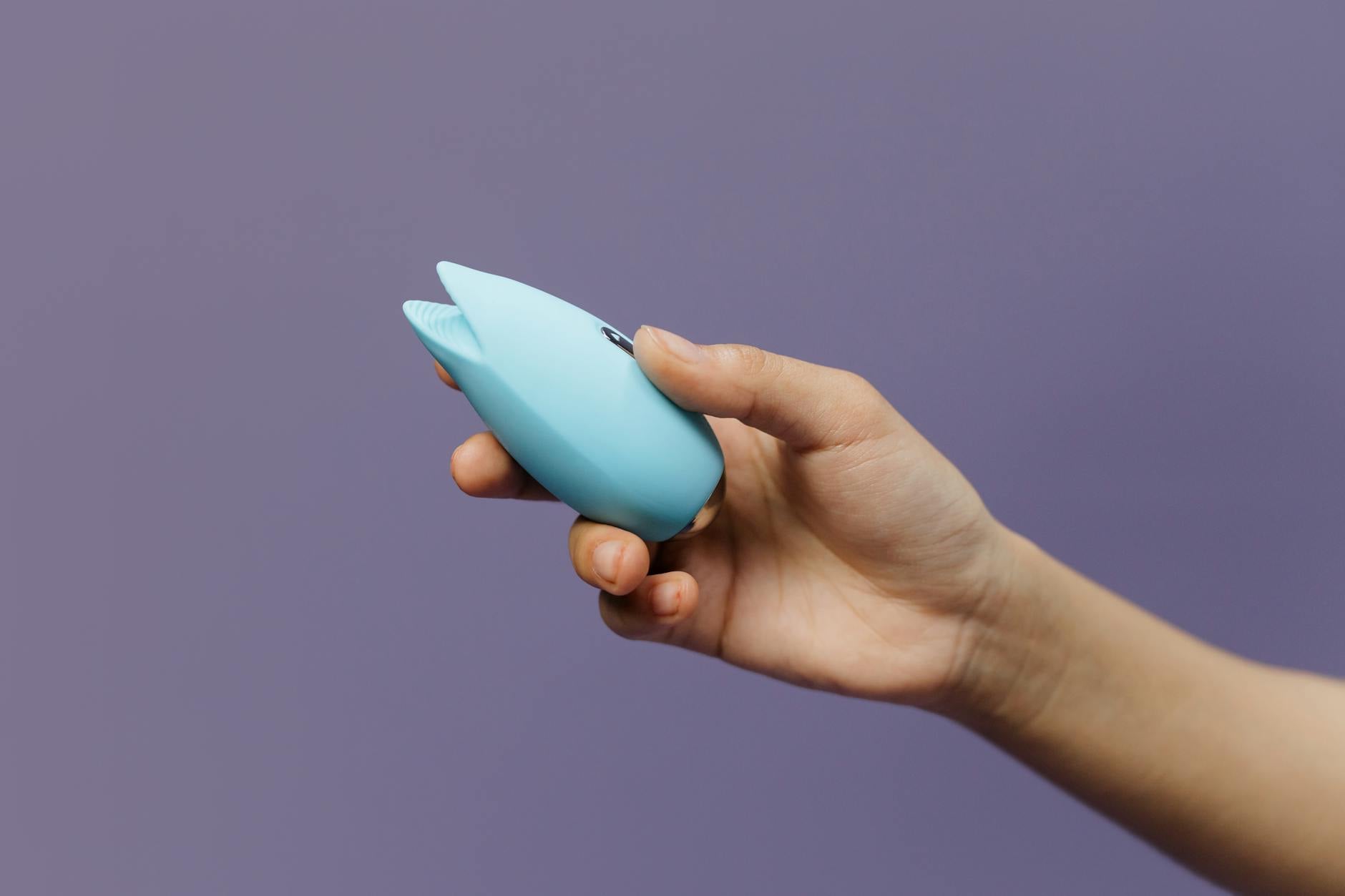
Start with the Lem on pattern 1 or 2. The suction design means your partner controls the intensity through their hand position and pressure, not just a button. This is actually better for communication early on because they can feel immediately if you respond to depth or gentle surface contact.
Try these angles: directly on the clitoris, to the side, with the suction pattern changing. Your partner learns your geometry. This is information they'll carry into all your future sex.\n Many couples find that the Lem creates a rhythm that your partner can participate in while still being deeply inside you or engaging with you differently. It's not a replacement for them. It's another instrument in the same song.
What happens after that first time
Honestly? One of three things. One, you both feel excited about it and want to play again soon. Two, you feel neutral and aren't sure if you'll use it regularly. Three, it feels a little awkward and you put it away for a few months. All three are completely normal.
Don't oversell it after. Don't say "That was amazing, right?" as if seeking confirmation. Just let it exist as something you tried together. If your partner asks questions later ("Should we use it again?", "What do you like best?"), that's a good sign. They're thinking about your pleasure between sessions.
The trust dividend
When you've named desire early, you build a different kind of relationship. You're not waiting five years to reveal that you want something specific. You're not performing. You're collaborating. And that changes how your partner responds to you more broadly. They learn that you have wants. They learn that naming them doesn't make you difficult or broken. You become someone to explore with, not someone to figure out.
Introducing a lemon vibrator isn't the same as introducing a partner to the concept of desire. But it's a very clear way of saying it out loud in your body. And sometimes that directness is exactly what a new relationship needs to build the right kind of foundation.
People also ask
How do I bring up wanting to use a toy if I'm worried they'll think something's wrong with me?
Here's the reframe: wanting to explore pleasure together is healthy. It signals self-awareness and trust in the relationship. If your partner responds negatively to you knowing what you want, that's information about them, not about you. Most people in new relationships are genuinely curious about their partner's desires. Frame it as discovery, not desperation. "I've been curious about trying this, and I'd love to share that with you" lands very differently than "I need this because you're not enough." One is an invitation. One is a complaint.
What if my partner doesn't want to use the toy with me?
That's okay. You can ask why without it becoming a negotiation. Maybe they're uncomfortable, maybe they don't understand what it is, maybe they want to wait. Listen. You can then decide whether solo use is acceptable to you, or whether this is a compatibility issue worth exploring. But don't push. Introducing desire tools is about expanding intimacy, not forcing it. If they're truly resistant and you feel this matters to you, that's a conversation for a different level (maybe with a therapist).
Is it weird to use a clitoral vibrator if I usually orgasm easily?
Not at all. Lemon vibrators, including the Lem, create sensation that's different from hands or penetration, even if you orgasm regularly. Some people use them because they like the feeling. Others use them for variety. Some use them to experience different types of orgasm. Ease of orgasm doesn't mean you don't benefit from other sensations. It just means you have options.
Should I buy the toy before or after we decide to try it together?
Either. If you already own a Lem or another lemon clitoral vibrator, just mention it in the conversation. If you don't, you could suggest shopping together. Some couples like picking it out as part of the experience. Others find that makes it feel more clinical. The toy itself matters less than the decision to try it.
How do I know if my partner is just agreeing to make me happy?
You don't always know immediately. But you watch what happens after. Do they ask questions? Do they initiate using it? Do they seem engaged during, or like they're tolerating it? Real enthusiasm shows up in small ways: curiosity, engagement, maybe a little playfulness. Grudging tolerance feels different. If you sense tolerance, you can gently check in. "Are you actually into this, or are you doing it for me?" Honesty matters more than enthusiasm.
Can we use a lemon vibrator for foreplay even if we're not sure about finishing with it?
Absolutely. Try it as part of arousal, then set it aside and continue with whatever feels natural. You're not locked into using it the whole time. Some couples find that the Lem or a lemon clitoral vibrator is great for getting warm and then they switch to other kinds of contact. Others use it throughout. Permission to experiment without commitment is actually key.
The real benefit
Introducing pleasure tools early in a relationship isn't about the toy. It's about building a sexual culture where honesty is normal. Where desire is named, not guessed. Where exploring together is the default. That foundation holds for years, whether you end up using the lemon vibrator regularly or rarely. You've established that you and your partner can talk about sex like adults who respect each other. That's the gift.
If you're ready to have this conversation, reach out to talk it through. Hello Nancy is here to support you at every stage of building the intimacy you want.