
Let's talk about what changes when life does
Intimacy doesn't stay static. You move in together. You have kids. You switch jobs. One of you gets sick. You enter new life phases. And suddenly, the physical connection that felt natural five years ago feels like something you're both navigating from scratch.
This is where a lemon clitoral vibrator like the Lem becomes less of a "novelty" and more of a conversation starter. Not because something's broken, but because you're both different people now.
Why introducing toys often means addressing the real thing first
Here's what I see in my practice: couples want to introduce toys, but they're actually trying to fix something deeper without naming it. A partner brings home a lemon vibrator thinking it'll solve reduced pleasure. But the actual issue is that you haven't had a conversation about desire in three years.
Toys don't heal disconnection. They work best when you're already connected.
Before you even open the box on a clitoral vibrator, ask yourself this: can we talk about what's changed? About what we want now? If the answer is "not really," start there. It takes one conversation, not therapy, but it takes honesty.
If you can talk about the shift, you're ready for the tool.
The conversation that makes the difference
Don't lead with the vibrator. Lead with the question.
Something like: "I've noticed our sex life has shifted since [kids/illness/work stress/moving]. I miss you. I want to find new ways that work for our actual lives now, not how we were." That's vulnerable. That opens the door.
Then, after a few days, you can say: "I looked into some things that might help. There's this clitoral vibrator that people talk about a lot. Would you be open to exploring something together?"
The key: make it a team project. Not "I want this" or "you need this." But "What if we tried this together?"
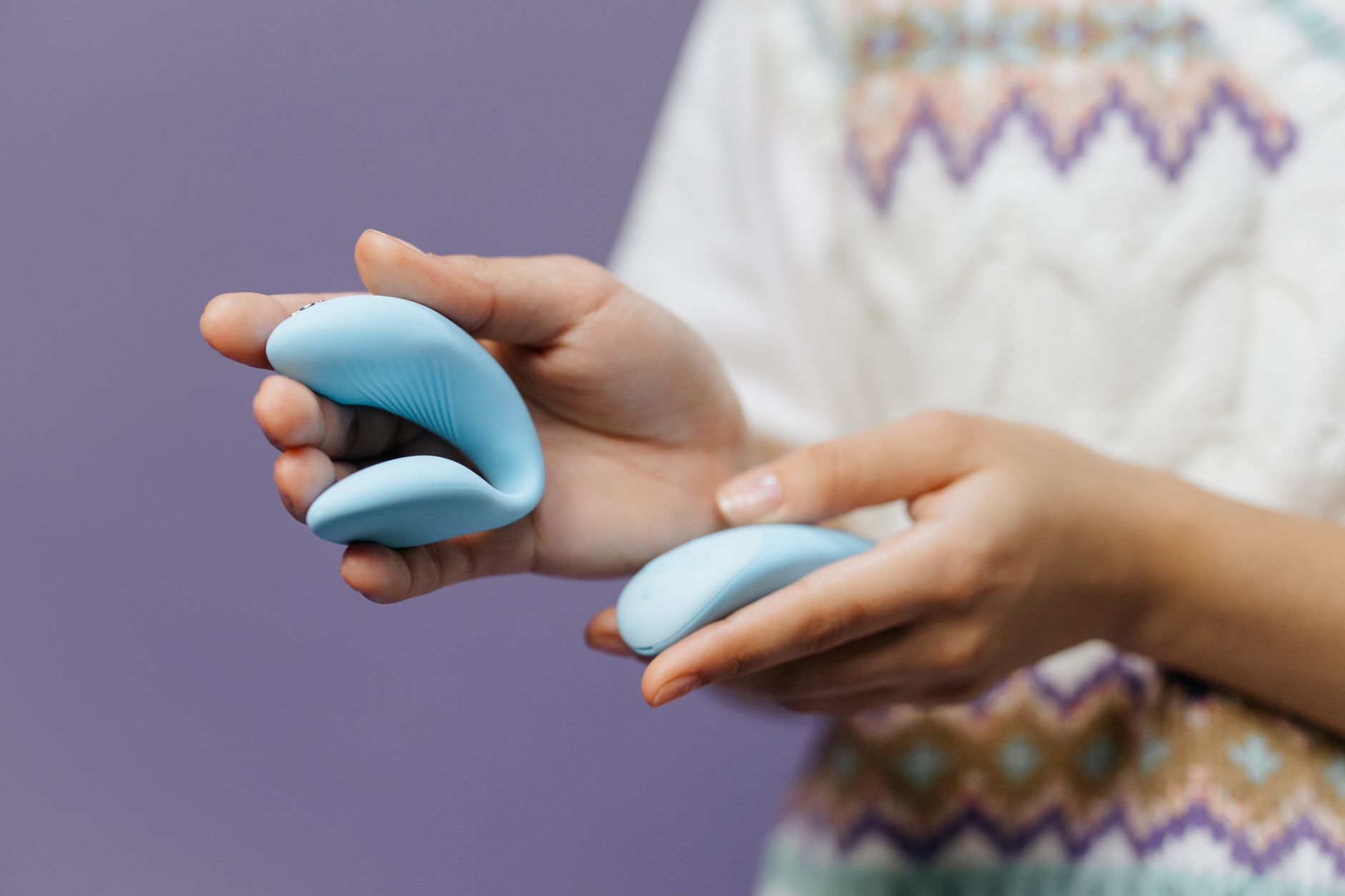
Photo by cottonbro studio on Pexels
What a lemon vibrator actually does in partnered use
Unlike internal vibrators, clitoral suckers like the Lem use gentle suction to stimulate the clitoral complex. The benefit for couples navigating transitions is simple: it's not a replacement for your partner. It's additive.
You can use it together during foreplay. You can use it while your partner touches you elsewhere. You can explore what intensity and pattern feel good without the pressure of "does this feel right to you right now."
That last part matters when you're rebuilding after a shift. Toys remove performance pressure. You get to focus on sensation instead of whether you're doing it right.
For couples managing stress, illness, or body changes, a lemon vibrator becomes permission to explore without shame. Which is exactly what transitions need.
How to actually introduce it together (practically speaking)
Step one: buy it together, or tell your partner explicitly that you did. No surprises. No hidden purchases. Transparency builds safety.
Step two: set a time that's not urgent. Not tonight. Not right now. "This weekend, maybe Thursday evening?" Something you can both mentally prepare for.
Step three: start with the easiest approach. One of you uses the Lem alone while the other watches and touches you elsewhere. Not him using it on you. Not yet. You, exploring, with him present and involved.
Why? Because you get to lead the pacing. You know what feels good. He gets to be part of discovery without the pressure of technique.
Step four: after you've explored solo, invite him to try. Some partners love holding it. Some prefer you holding it while they do other things. There's no script.
Step five: talk after. Not during. During is about sensation. After is about "that was interesting," or "I liked this part," or "I'm not sure about that."
What to watch for when integrating a clitoral vibrator into partnered intimacy
Some partners feel threatened by toys. If your partner does, that's information, not a problem. Ask what the threat is. Often it's "I'm worried I'm not enough." That's a conversation about desire and capacity, not about the toy.
Other partners struggle with the noise or the texture or not knowing where to put their hands. These are logistics, not rejection. You can troubleshoot them.
Some people have a numbness or difficulty reaching sensation with a partner present due to stress or attention. A lemon vibrator helps here because it's external stimulus that doesn't require you to perform arousal. You can just let it happen.
The only real red flag: if either of you is using the toy to avoid each other, rather than enhance time together. If he's defaulting to the vibrator instead of touch, or you're using it as a way out of intimacy, that's worth naming.
But if you're both leaning in, curious, and exploring what works in this new phase of your partnership, you're doing it right.
Timing matters more than you think
Introducing a lemon vibrator during a major life transition is actually good timing, not bad. You're already in change mode. You're already adjusting.
Bad timing is when you're in crisis. Don't unpack a new toy while one of you is spiraling. Do it when you're both stable enough to be curious.
Good timing is: you've talked about the shift. You both agree something needs to change. You're willing to try new things.
If you just had a baby, give yourself six weeks minimum before introducing anything new to sex. If you're managing illness, make sure your partner's up for it physically. If you just moved, wait until the boxes are unpacked and you feel grounded.
Clitoral vibrators work best when you're not adding them on top of crisis. Add them on top of willingness.
The unexpected benefit: it often reopens the conversation
What I've noticed in my practice is that couples who introduce toys together during a transition often find that the toy isn't the thing that helps. The conversation is.
You had to talk about desire. About what's changed. About what you want now. That's the real shift.
The lemon vibrator just gives you permission to have that conversation in a concrete, playful way.
Some couples end up using the Lem constantly. Others try it once and go back to their old rhythm, which is now conscious instead of automatic. Both are wins.
What matters is that you rebuilt the bridge together.
FAQ
Can I use a lemon vibrator if my partner has never wanted toys before?
Yes, but start with the conversation, not the product. Ask why they haven't wanted toys. "I'm worried it means you're not satisfied with me" is different from "I just think they're uncomfortable." The first needs reassurance about desire and capacity. The second is just a comfort issue you can solve together.
What if my partner wants to use the lemon vibrator on me but I'm nervous?
That's normal. You don't control the sensation the same way when someone else is holding it. Start by holding it yourself while your partner touches you elsewhere. Once you know what it feels like, you can hand it over. Consent is ongoing, not one-time.
Is using a clitoral vibrator with my partner cheating or less intimate?
No. Toys are tools. A vibrator is not a person. If anything, choosing to explore together is more intimate because it requires vulnerability and communication. Less intimate would be using it alone to avoid connection.
How do I know if my partner is actually comfortable with this or just going along with it?
Ask directly. "Are you into this or are you doing this for me?" If it's the second, pause. You need enthusiasm, not compliance. A good partner will tell you if they're uncertain or not feeling it.
What if we try it once and don't like it?
Then you don't do it again. No shame, no weirdness. "That wasn't for us" is a completely valid conclusion. You tried something together. That took courage. The exploration itself was the point.
Does using a lemon vibrator mean something's wrong with our sex life?
No. It means you're willing to adapt to a new phase of your partnership. That's actually the opposite of something being wrong. It's something being alive.
What you're really doing here
Introducing a clitoral vibrator like the Lem with your partner during an intimacy transition isn't about the tool. It's about saying: "We've changed. I want to figure out what works for us now."
That takes courage. It takes vulnerability. It takes admitting that the old way doesn't fit anymore.
But that's exactly what partnerships need at every transition. Not the toy. The willingness to reimagine together.
If you're ready to have that conversation, you're already most of the way there.