
Here's the thing about introducing toys together
Most people assume the tricky part is the vibrator itself. It's not. The tricky part is the conversation, the reassurance, and the permission you both need to give each other to actually enjoy it. Once you've handled that, using a lemon vibrator as a couple is genuinely straightforward and often transforms how connected you feel.
I've worked with hundreds of couples who hesitated over this exact moment. The ones who moved forward always said the same thing after: "Why did we wait so long?" Not because the toy itself was life-changing, but because the vulnerability required to use it together built intimacy that wasn't there before.
Why partners want to participate (and what it actually means)
When your partner expresses interest in exploring a lemon clitoral vibrator with you, they're usually saying one of three things: they want to feel more involved in your pleasure, they're curious about what works for you, or they want to try something new together. None of these are threats to the relationship. All of them are openings.
The myth is that toys mean your partner isn't enough. The reality is that introducing devices like a lemon vibrator (or suction toys generally) often means your partner is invested enough to learn what actually gets you there. That's the opposite of indifference.
Some partners worry that the toy will replace them. You can address this directly: "I want you here with me while we try this. This isn't separate from you." That one sentence does more work than hours of reassurance.
The conversation you actually need to have
Don't lead with the toy. Lead with what you want from them.
"I've been curious about exploring something together. I want to feel you close while we do it." That's different from "I want to buy a vibrator." One invites participation. The other sounds like a solo project they're watching.
Show them what you're thinking about. Not in a clinical way. Say: "I found this thing called a lemon vibrator. It works differently than other toys because it uses suction instead of vibration. I'd like for you to be involved while I try it." Then let them ask questions. Don't answer what they don't ask.
If they hesitate, ask why. Common concerns: it'll hurt you (it won't), you'll prefer it to them (you won't), it means something's wrong with your sex life (it means something's right about your desire to explore). Each one deserves a straight answer, not a reassurance speech.
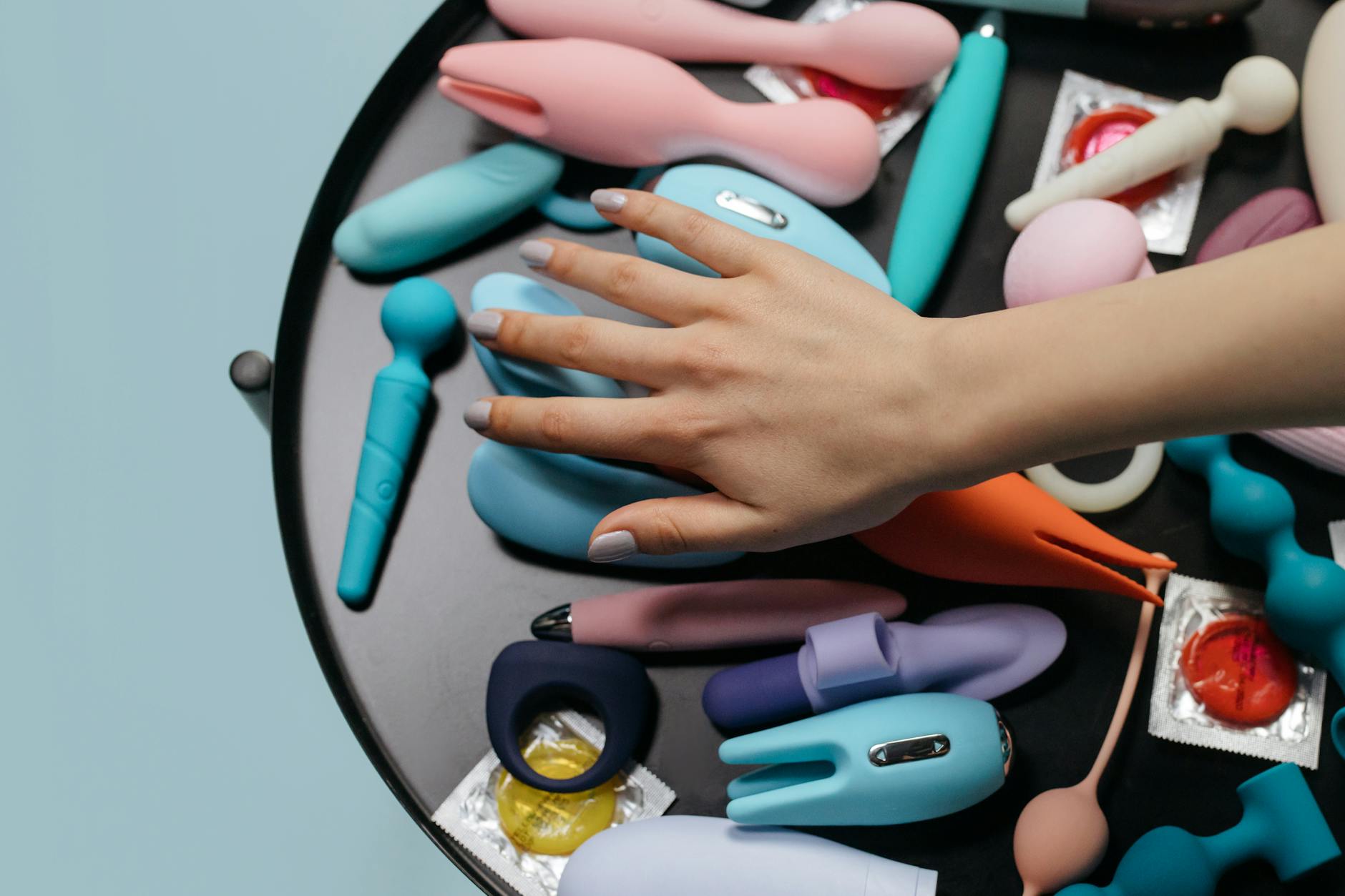
Photo by cottonbro studio on Pexels
How to physically introduce the toy together
Start outside the bedroom. Unbox it together. Let them hold it, feel the weight, understand the controls. A lemon vibrator (often called a lemon sucker in product language) looks less intimidating than a traditional wand, and handling it together removes the mystery.
Explain how it works. The suction creates a rhythmic pressure that's different from vibration. You control the intensity with buttons. It takes thirty seconds to fully understand. Doing this in daylight, clothed, removes the performance pressure that kills arousal.
When you're ready to actually use it together, start slow. You might suggest: "I want you to touch me while I use this. I want to feel you here." That positions the toy as an addition to connection, not a replacement.
Have them start by stimulating you manually. Then introduce the lemon vibrator. Let them watch what happens to your body. This is the part where many partners suddenly understand: it's not the toy that's intimate, it's watching someone they care about experience pleasure. That's the real shift.
Managing the moment (what actually happens)
When a clitoral vibrator like the Lem (the lemon-shaped option from Hello Nancy's) makes contact, your body will likely respond quickly. Some people tense up. Some people relax immediately. Your partner needs to know both are normal.
You might feel self-conscious. That's the most common response. The fix is communication, not stopping. "I'm not used to being watched," you might say. They can respond with something simple: "I like watching you feel good." That reframes the dynamic from performance to participation.
Your partner might feel uncertain about what to do with their hands. Guide them. "Touch my breasts," or "Keep your hand on my back," or "Just stay close." Specificity kills the awkwardness.
The actual pleasure response might be more intense than partnered sex usually is. You might orgasm differently than you do without the toy. This is information, not a problem. After, you can talk about it: "That was different because..." You're learning each other all over again.
What to do with your hands (and theirs)
Your hands have a job. You're holding the lemon vibrator and controlling it. Your partner's hands can be anywhere that feels good. Some couples find that sustained eye contact during toy use creates more emotional closeness than the actual stimulation. Others prefer touch. There's no correct version.
If your partner wants to hold the toy sometimes, let them. They'll learn the pressure you prefer, the angles that work, the rhythm that gets you there. This is how the toy becomes collaborative instead of something you happen to use near them.
Some partners enjoy using the toy on a partner with different anatomy. That's a separate conversation and a different technique, but it's worth knowing that lemon clitoral vibrators work for anyone with a clitoris. If partnered exploration eventually includes mutual pleasure, you're both equipped.
The emotional piece (which is actually the most important part)
You might feel vulnerable. You should. Using a toy with someone requires admitting: "This is what I need. This is what gets me there." That's one of the bravest things you can do in a relationship.
Your partner might feel emotions they weren't expecting. Some feel protective. Some feel aroused just by being near you experiencing pleasure. Some feel relieved that there's a clear path to your satisfaction. All of these are fine.
After, have a real conversation. Not "that was good," but "I felt connected when you...", "I want to try this next time..." These conversations are where the real intimacy lives. The toy is just a vehicle for it.
If the first attempt feels awkward or doesn't work, that's completely normal. You're both learning. The second time is almost always better because you know what to expect. By the third or fourth time, it can feel as natural as any other part of your sex life.
When your partner wants to participate solo (partnered sex specifically)
If your partner wants to use a lemon vibrator on you during partnered sex (penetrative or otherwise), that's a different rhythm. The toy works alongside other connection, not instead of it.
You can incorporate it like this: they enter you (if that's part of your sex), and once you're connected, introduce the vibrator. The suction creates a different sensation than either element alone. Many couples find that this combination generates orgasms that feel more full-body than singular.
If penetration isn't part of your sex life, a lemon clitoral vibrator can be the main event while your partner is present and engaged. They can kiss you, touch you, talk to you. The toy is one layer of a larger experience.
Talk about frequency and integration
Don't assume it becomes a regular thing automatically. Have a conversation about how often you both want to use the toy together. Some couples use it every time. Some use it occasionally. Some cycle through periods of toy use and periods without. All of these are sustainable.
You might discover that you enjoy solo exploration with your lemon vibrator more than partnered use, and that's fine. The fact that your partner participated in introducing it doesn't lock you into using it together forever.
FAQ
What if my partner gets insecure after we use a toy together?
Insecurity usually surfaces if there's been no real conversation before or after. Go back to the conversation: "What made you uncomfortable?" Listen without defending. Then be specific: "I wanted you here because I wanted to share this with you. The toy helps my body do what feels good. It doesn't replace you." If the insecurity persists, that's worth exploring with a couples therapist.
Can using a lemon vibrator together damage trust?
No. Avoiding difficult conversations damages trust. Using a toy damages nothing. The vulnerability required to explore something new together actually builds trust if both people are willing.
What if my partner wants to use the toy but I'm not sure I want them to watch?
Say that. "I want to use this together, but I need you to not watch the first time. Let's try it with you touching me instead." You can build toward being watched as you get more comfortable. Comfort comes before performance, always.
Should we use condoms or barriers with the toy?
If the toy moves between partners or between genital and other areas, yes. Wash or wipe the lemon vibrator between use on different bodies or areas. Check the care instructions for your specific toy.
How do I know if we're using the lemon vibrator correctly?
If it feels good, you're using it correctly. There's no wrong angle or pressure as long as it doesn't hurt. Experiment. What works this week might shift next week.
What if we try it and it just doesn't work for us?
That's completely valid. Not every tool works for every couple. You tried something vulnerable together, and that's worth something. Put the toy away or explore it solo later. The conversation and the willingness to explore matters more than the outcome.
The real payoff
The couples I've worked with who introduce toys together almost always report the same thing: the act of having that conversation and following through builds a kind of intimacy that's hard to create any other way. You're saying to your partner, "I want to feel good, and I want you here with me while it happens." That's not small.
A lemon clitoral vibrator is just a tool. What matters is the permission you're both giving each other to explore, to be vulnerable, and to admit that you want more than what you've been doing. That's where the real pleasure lives.