Why Lemon Vibrators Feel Stronger After Menopause
Here's what nobody tells you about menopause and pleasure: your most satisfying orgasms might be waiting on the other side of it. Menopause changes sensation. It doesn't diminish capacity. And if you understand what's shifting physiologically, you can work with your body instead of against it.
I work with couples navigating midlife transitions, and this pattern shows up again and again. Women report that after menopause, orgasms feel more concentrated, more intense, sometimes almost shocking in their clarity. The reason isn't mystical. It's physiology plus permission.
What actually changes during and after menopause
Estrogen drops. This is the anchor fact. When estrogen declines, the tissue in your vulva becomes thinner and less elastic. Lubrication takes longer to build. The pelvic floor loses some of its structural support. These are real changes, and they deserve acknowledgment.
But here's the part that gets overlooked: the neural architecture doesn't change. Your clitoris has eight thousand nerve endings. Menopause doesn't remove them. The brain's capacity for arousal and orgasm stays intact. What changes is the speed and texture of response, not the destination.
Many of my clients find that lemon clitoral vibrators, particularly the air-suction design of the Lem, work better in midlife than traditional vibrators because suction stimulates nerves without requiring the same kind of tissue tolerance that direct vibration demands. The sensation feels fresher, more focused.
Why sensation often intensifies after 40
This seems backwards, I know. But there are three concrete reasons this happens.
Reduced pelvic floor tension. Younger bodies often carry chronic pelvic floor tension from years of trying to suppress arousal, manage period pain, or regulate pleasure around a partner's rhythm. After menopause, that unconscious clenching often finally releases. The pelvic floor can relax fully, which paradoxically makes orgasm feel deeper and more whole. A lemon vibrator against a relaxed pelvic floor creates a different sensation than the same device against a held muscle.
Mental clarity and less cognitive load. For forty-ish years, your brain has been managing hormonal cycling, fertility concerns, and the internalized pressure to perform. That cognitive overhead lifts after menopause. The mental space available for sensation expands. Pleasure that was fragmented by distraction can finally consolidate. This is why so many people report that they experience orgasm more vividly after menopause, not less.
Permission and self-knowledge. Post-menopausal bodies come with less social pressure to appeal, perform, or defer. Many people discover for the first time that they get to explore their own pleasure on their own terms. That psychological shift alone transforms the experience. You're not managing someone else's rhythm or expectation. You're simply present with sensation.
How lemon vibrators work differently on post-menopausal tissue
Tissue changes matter for which tools work best. After menopause, direct vibration can sometimes feel abrasive or overstimulating on thinner, more sensitive tissue. Lemon sexual toys use gentle air-suction or sonic technology instead of traditional buzzing vibration.
This design choice becomes significant. Suction stimulates the clitoral complex without friction. It creates a gentle pressure that many people find more comfortable and more intense simultaneously. The sensation feels less like buzzing and more like rhythmic stimulation that builds and peaks in a way that can feel almost overwhelming.
Water-based lubricant enhances this further. After menopause, lube isn't a sign of dysfunction. It's a tool that makes thinner tissue more responsive. Using a lemon clitoral vibrator with good lube means your tissue stays supple and the device glides without drag. Orgasms often feel stronger because there's less friction getting in the way of pure sensation.
The pelvic floor adjustment that matters
This one shifts everything. After menopause, the pelvic floor naturally loses some elasticity from lower estrogen. But that loss can actually help orgasm feel different in a good way. Here's why.
Younger bodies often grip during orgasm, clenching the pelvic floor unconsciously. This creates a narrowing sensation that feels good but also limits how far the wave can travel. Post-menopausal bodies, with less muscle tension overall, often experience orgasm as a full-body release rather than a localized clench. The wave has more room to expand.
I recommend pelvic floor exercises to my clients not to tighten, but to learn the difference between tension and release. Kegels are fine, but the real magic is learning to consciously relax the pelvic floor, which becomes harder with age. Spending a few minutes daily simply releasing the pelvic floor, then using a lemon vibrator, often produces sensations people describe as revelatory.
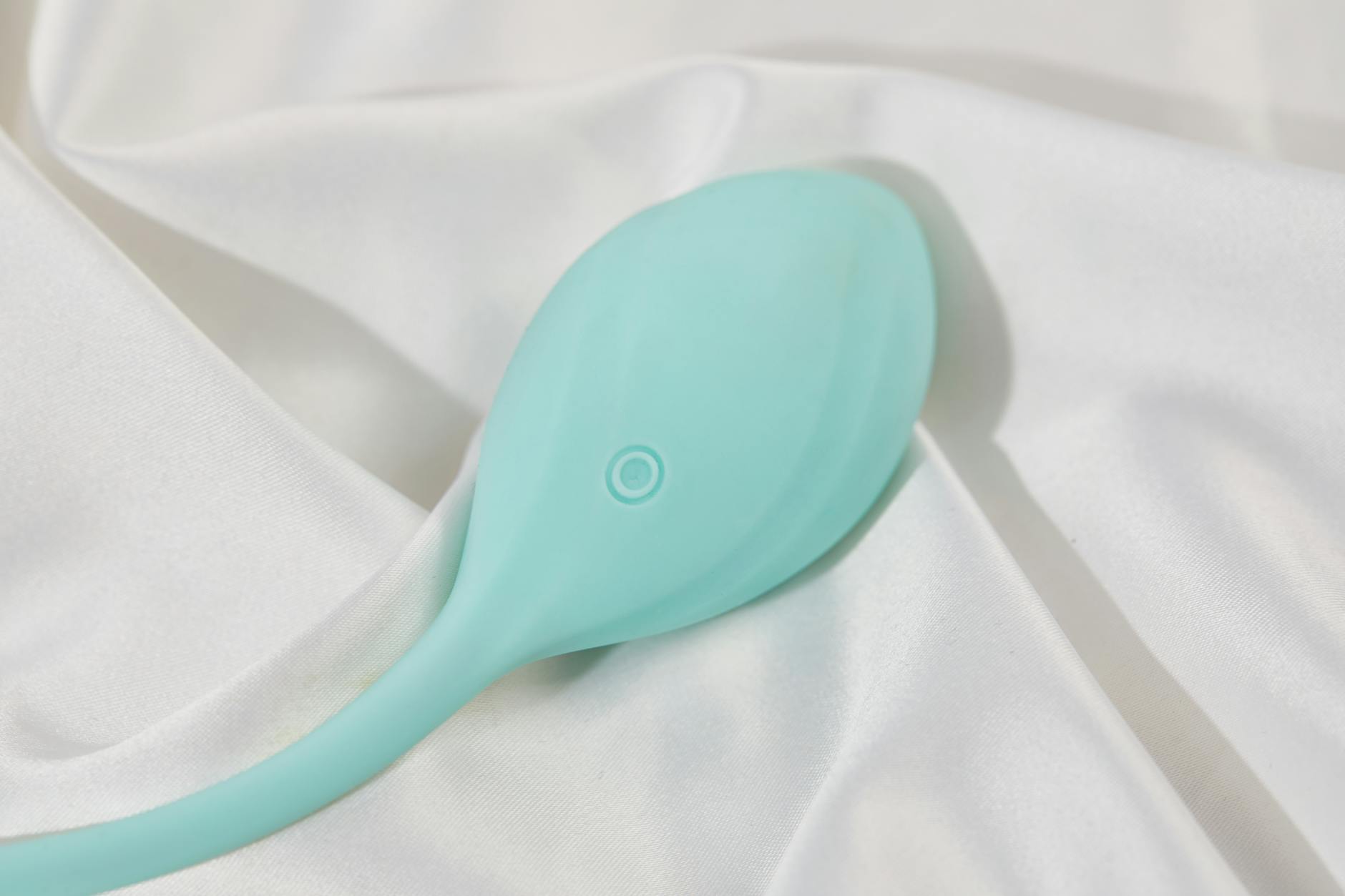
Photo by IFONNX Toys on Pexels
Lubrication, patience, and the texture of pleasure
Let me be direct: using a lemon vibrator after menopause without lube is like trying to swim in a pool that's half-drained. It's possible. It's also working against yourself.
Water-based lube isn't a concession. It's a tool that changes everything. After menopause, your body produces less natural lubrication, which means tissue doesn't plump with blood the same way. Lube solves both problems. It reduces friction, and the act of applying it also extends warm-up time, which your body now needs to reach arousal.
I recommend starting with lube, a low intensity setting on the Lem (start at pattern 1 or 2), and a longer warm-up window. Fifteen to twenty minutes. This feels long compared to what might have worked at 25. It's not. It's actually the tempo your nervous system needs now. Arousal builds gradually. When you meet your body's timeline instead of rushing it, orgasm arrives with more intensity, not less.
When sensation changes mean something else
Sometimes what feels like a loss of sensation is actually emotional. Menopause arrives alongside other midlife shifts: grown children, relationship friction, career uncertainty, grief. It's easy to assume any pleasure change is hormonal. Often it's not. Often it's something else entirely.
This is where partnership matters. If you're with someone, separating the physical conversation from the relational one prevents both from getting stuck. "My body is responding differently to touch" is not the same conversation as "I want us to reconnect." Name them separately. Work them separately. A lemon vibrator can help with the first. Communication and intention help with the second.
When to check in with a doctor
If penetration or any kind of sexual activity becomes painful, get evaluated. Genitourinary syndrome of menopause is common and highly treatable. Topical estrogen creams, vaginal moisturizers, and systemic hormone therapy are all options. A menopause-informed gynecologist can transform things in weeks.
If desire has vanished completely and isn't returning, that's also worth discussing with someone. Testosterone therapy exists and works for many people. It's prescribed conservatively in the US, but it's available and often life-changing for the right candidate.
Menopause is not an ending. It's a reset. What's on the other side is often deeper, more satisfying, and sometimes startlingly more intense than what came before. The lemon vibrators and clitoral toys we reach for now are tools designed for the bodies we actually have, not the bodies we used to have. That's not a compromise. That's precision.
People also ask
Why do orgasms feel stronger after menopause?
Orgasms often feel stronger after menopause because the pelvic floor has released chronic tension it held for decades, allowing sensation to expand rather than localize. The brain also has more space for pleasure when hormonal cycling and fertility concerns no longer demand cognitive resources. And psychologically, the pressure to perform or manage someone else's rhythm often lifts, creating presence and intensity that weren't available before.
Do lemon vibrators work the same way after menopause?
Lemon clitoral vibrators work differently after menopause because post-menopausal tissue is thinner and more sensitive. Air-suction designs like the Lem are particularly effective because they stimulate through gentle pressure rather than direct vibration, which can feel abrasive on delicate tissue. Many people find that orgasms with a lemon vibrator feel more intense and focused after menopause, not weaker.
How long does it take to feel pleasure after menopause?
Arousal typically takes longer after menopause. Where it might have taken five to ten minutes at 35, it now often takes fifteen to twenty. This isn't a loss. This is your body's new baseline. Using a lemon sexual toy with lube and allowing time for sensation to build often creates more satisfying results than rushing the process. Patience plus the right tool equals intensity.
Is lube necessary when using a lemon vibrator after 40?
Yes, essentially. After menopause, natural lubrication decreases because tissue produces less blood flow in response to arousal. Water-based lube makes contact between a lemon vibrator and your tissue comfortable and more responsive. It's not optional. It's the difference between friction and glide, and between moderate sensation and orgasm that feels overwhelming in the best way.
Can menopause change how a lemon vibrator feels?
Absolutely. Menopause changes tissue texture, sensitivity, and how quickly arousal builds. These changes mean a lemon vibrator might feel different, often more intensely. What took multiple patterns to reach at 35 might now be accessed at a lower intensity. Some people find they need to adjust which pattern or setting they prefer. This is tuning, not dysfunction.
Should I see a doctor if my pleasure changes after menopause?
If pleasure changes feel like gradual adaptation, no. If pain appears, or if desire vanishes completely and stays gone, yes. Genitourinary syndrome of menopause is real and treatable. If you're noticing significant shifts, a menopause-informed gynecologist can assess whether you'd benefit from topical estrogen, systemic therapy, or other support. Your pleasure matters enough to get clarity.
The deeper truth about pleasure after 40
Menopause changes your body. It doesn't diminish your capacity for sensation. In fact, the women I work with often report that their most satisfying sexual experiences happen in their forties, fifties, and beyond. The combination of reduced pelvic floor tension, mental clarity, permission, and the right tools (like a lemon clitoral vibrator designed for post-menopausal tissue) creates conditions for pleasure that are different from younger years, and often more intense.
Your body after menopause isn't broken. It's evolved. Understanding what's shifted, working with lube and patience, and using tools like Hello Nancy's lemon vibrators that are designed for sensitive tissue creates space for sensation you might not have expected. The research on pleasure across the lifespan is clear: midlife doesn't mark the end of your sexual life. It marks the middle chapter, and in many ways, the most interesting one.
Sources
Genitourinary syndrome of menopause: American College of Obstetricians and Gynecologists (ACOG)
Pelvic floor function across the lifespan: International Urogynecological Association
Clitoral tissue sensitivity and age: Journal of Sexual Medicine