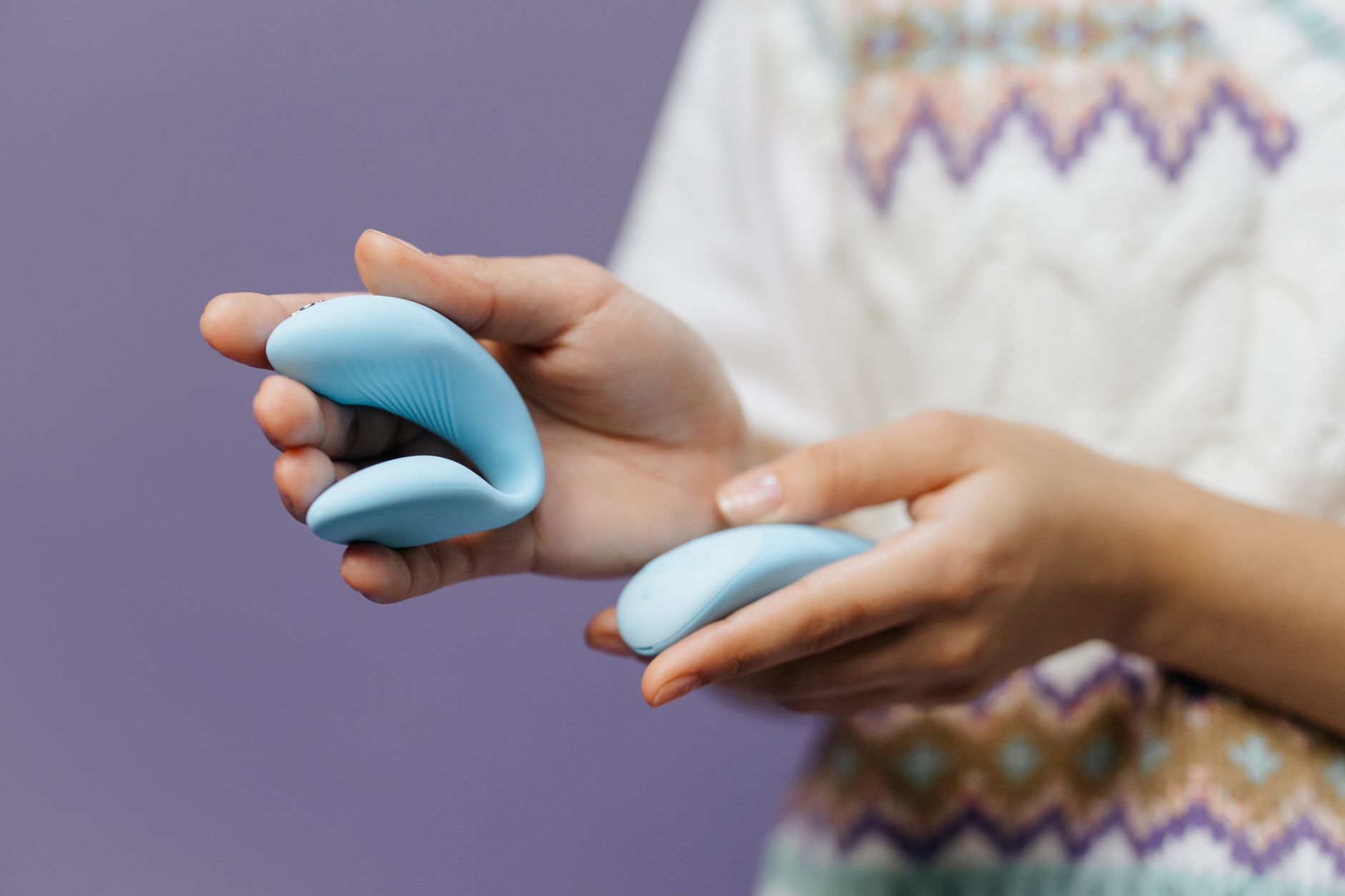
Here's what nobody tells you about clitoral sensitivity and aging
Your clitoris doesn't get less sensitive as you move through midlife. What actually happens is far more specific. The tissue thins slightly, the surrounding structures lose some elasticity, and the kinds of stimulation that felt perfect at 25 might feel sharp or numbing at 45. That's not a loss of capacity. It's a shift that, once you understand it, opens up better options.
Enter lemon vibrators. The design matters more than you'd think.
How traditional vibration actually works on sensitive tissue
When you press a standard vibrator against your clitoris, you're creating rapid friction between the toy's surface and your skin. The vibration moves back and forth, left and right, and the tissue compresses against whatever's underneath it. For years, this feels fantastic. The stimulation is direct, precise, and it builds arousal quickly.
But as tissue thins and becomes more delicate, that same friction can start to feel less like pleasure and more like numbness or irritation. Some people describe it as "buzzing past the sensation" or feeling like they're working too hard to reach climax. Others say the tissue feels almost rawer, like the toy is vibrating at them instead of with them.
This is the gap where lemon vibrators step in.
Why suction changes the equation
Lemon clitoral vibrators work differently. Instead of relying on rapid side-to-side vibration, they use gentle suction combined with pulsing air waves. This creates a very different kind of stimulation: the toy draws the clitoral tissue upward and inward, then releases in a rhythmic pattern. It's less about friction and more about pressure and release.
The advantage for sensitive tissue is significant. Suction stimulates the thousands of nerve endings in your clitoris without creating the same level of surface friction. You get intense sensation, sometimes even more intense than traditional vibration, but it's distributed differently. The tissue isn't compressed against a hard surface. It's being gently suctioned into the toy's opening, which allows for deeper sensation with less mechanical stress.
For people navigating midlife transitions, this translates to being able to reach orgasm with less strain on tissue that's genuinely more delicate than it used to be.
The physiology piece: what's actually changing
Around midlife, hormonal shifts affect not just lubrication but the actual tissue structure. Collagen production decreases, which means the dermis and epidermis of your clitoris lose some thickness and structural support. The epithelial layer becomes more fragile. At the same time, blood flow patterns can shift, which changes how quickly arousal builds and how the tissue responds to pressure.
None of this means you're broken or that pleasure is off the table. What it means is that the kind of stimulation that works best has changed. A lemon vibrator accounts for this change naturally. The suction mechanism doesn't require the aggressive surface contact that traditional vibrators do. You get stimulation that's calibrated to the tissue you actually have right now.
Many people who've been using traditional vibrators for years report that switching to suction-based lemon vibrators feels like rediscovering sensation they thought they'd lost.
The pattern question: why variable settings matter
Most traditional vibrators offer different speeds: low, medium, high. Lemon vibrators typically offer different patterns in addition to intensity levels. Some mimic a steady pulse, others create waves or undulating rhythms. The benefit during midlife is that varying the pattern can help you find what your tissue actually responds to right now.
A pattern that pulses in waves might feel completely different from one that builds in intensity. Some people find that because sensitive tissue doesn't respond as quickly to constant vibration, a pulsing or building pattern gives the tissue time to swell and respond between stimulation peaks. Others find that gentler, steadier patterns work best because they allow arousal to build gradually rather than demanding intense response from delicate tissue.
The other piece: starting at lower intensity patterns and working up is often more effective with suction vibrators than with traditional ones. Because the stimulation is more efficient, you might find that pattern 1 or 2 on a lemon vibrator creates the same sensation level as medium-to-high on a traditional vibrator. This matters because it means you can experiment and dial in exactly what works for you without overshooting into numbness.
The warm-up part people skip
Because suction-based stimulation requires tissue to be engorged and responsive, the warm-up phase becomes even more important during midlife transitions. Your body might need 15 to 25 minutes of foreplay or self-touch before a lemon vibrator will feel as effective as it could. That's not weakness. That's just how the physiology works when hormonal support for rapid arousal has shifted.
If you're jumping straight to the toy without adequate arousal, the tissue won't be as swollen, and suction won't grip as effectively. The result feels muted or unsatisfying. But if you spend time on other forms of stimulation first.sensual touch, kissing, fantasies, whatever gets your arousal building.the tissue is ready for the suction, and the experience is completely different.
This is actually an advantage if you think about it. The warm-up phase deepens connection, whether you're with a partner or alone. It builds anticipation. And it works with your body's current needs instead of against them.
Lubrication and tissue care
Here's something that matters whether you use lemon vibrators or any other toy: lubrication during midlife transitions isn't optional. Even if you don't have dryness, adding water-based lube creates a protective layer between the toy and tissue. It makes suction feel smoother and reduces any friction that might happen at the edges of the toy's opening.
Some people assume that because suction vibrators reduce friction, they don't need lubricant. Not quite. The lube serves multiple purposes. It protects tissue, it makes the sensation feel smoother, and it actually helps the suction mechanism work more effectively because there's no micro-friction creating resistance.
Use a water-based lubricant generously. If you're using a silicone toy like the Lem vibrator, silicone lube will feel richer, but water-based works just fine and is easier to clean up.
The pleasure part: what people actually report
When I work with clients navigating midlife transitions, the pattern with lemon vibrators is pretty consistent. The first time feels interesting but not earth-shattering. The second or third time, once the body figures out the rhythm and the tissue is warmed up and responsive, the sensation often becomes surprisingly intense. People report orgasms that feel different from what they knew before.sometimes deeper, sometimes more localized, sometimes full-body but in an unfamiliar way.
The learning curve is real, but it's not a barrier. It's actually valuable because it means you're actively engaged with your body's responses rather than passively receiving stimulation.
When to reach out for more support
If suction vibrators feel uncomfortable or if you're experiencing pain, that's worth taking seriously. Genitourinary syndrome of menopause is real and treatable. A conversation with a gynecologist who specializes in midlife health can rule out any tissue changes that might need topical hormone therapy or other specific care.
Likewise, if you're struggling with desire or arousal overall, that's separate from the tool question. Want to explore other strategies for rebuilding pleasure during major life transitions? That's exactly the kind of topic worth exploring with someone like a relationship coach or sex-positive therapist.
But for the specific question of clitoral stimulation during midlife when tissue has genuinely shifted.lemon vibrators are often the smarter engineering choice.
FAQ
Why do lemon vibrators feel less intense than traditional vibrators at first?
Suction vibrators require tissue to be engorged to work effectively. During early arousal or if you haven't had extended warm-up time, the clitoris is less swollen, so the suction doesn't engage as fully. The sensation builds as arousal builds. It's not that the toy is weak. It's that it works better when your body is more ready.
Can I use a lemon vibrator if I still have good clitoral sensitivity?
Absolutely. Lemon vibrators aren't just for people with reduced sensitivity. They're a different kind of stimulation entirely. Some people prefer suction because it feels more intense or because they enjoy the pulsing patterns. Sensitivity level doesn't determine whether a lemon vibrator works for you. Preference does.
How long does it take to adjust to suction vibration?
Most people notice a significant difference within 3 to 5 uses, assuming you're spending adequate time on warm-up and arousal. The body learns the rhythm, tissue responds more readily, and the sensation becomes more reliable. Some people take longer. There's no standard timeline. What matters is consistency and patience.
Is water-based lube the only option for lemon vibrators?
Water-based lube is the most practical because it works with silicone toys and is easy to clean. Silicone lube feels richer and lasts longer but can degrade silicone toys over time. Oil-based lubes aren't recommended with silicone. Stick with water-based and you won't have complications.
Do lemon vibrators work better for partnered or solo play?
Lemon vibrators work in both contexts. During partnered play, the smaller profile makes them easier to use during intimacy without getting in the way. The relatively quiet operation also means less noise disruption. Solo, they're equally effective. The context doesn't change the physiology.
What if a lemon vibrator still feels uncomfortable?
If discomfort persists after several uses with proper warm-up and lubrication, it's worth getting checked out. Sometimes tissue changes during midlife require specific support like topical hormone therapy. Sometimes the issue is psychological, and working with a sex-positive therapist can help. Sometimes it's just a mismatch between your body and that particular toy, and a different style works better. The discomfort isn't failure. It's information.
The bottom line
Your clitoris is resilient. What changes during midlife is the kind of stimulation that works best for the tissue you actually have. Lemon vibrators account for those changes in a way that standard vibration often doesn't. They deliver intense sensation while reducing the mechanical stress on delicate tissue. For many people navigating midlife transitions, that's the difference between struggling to reach orgasm and rediscovering pleasure that feels new.
If you want to explore whether a lemon vibrator makes sense for your body and your current needs, the team at Hello Nancy's can help you figure out the right fit. And if you have bigger questions about pleasure, intimacy, or navigating major life shifts, that's exactly what reaching out to someone who specializes in midlife relationship dynamics is for.