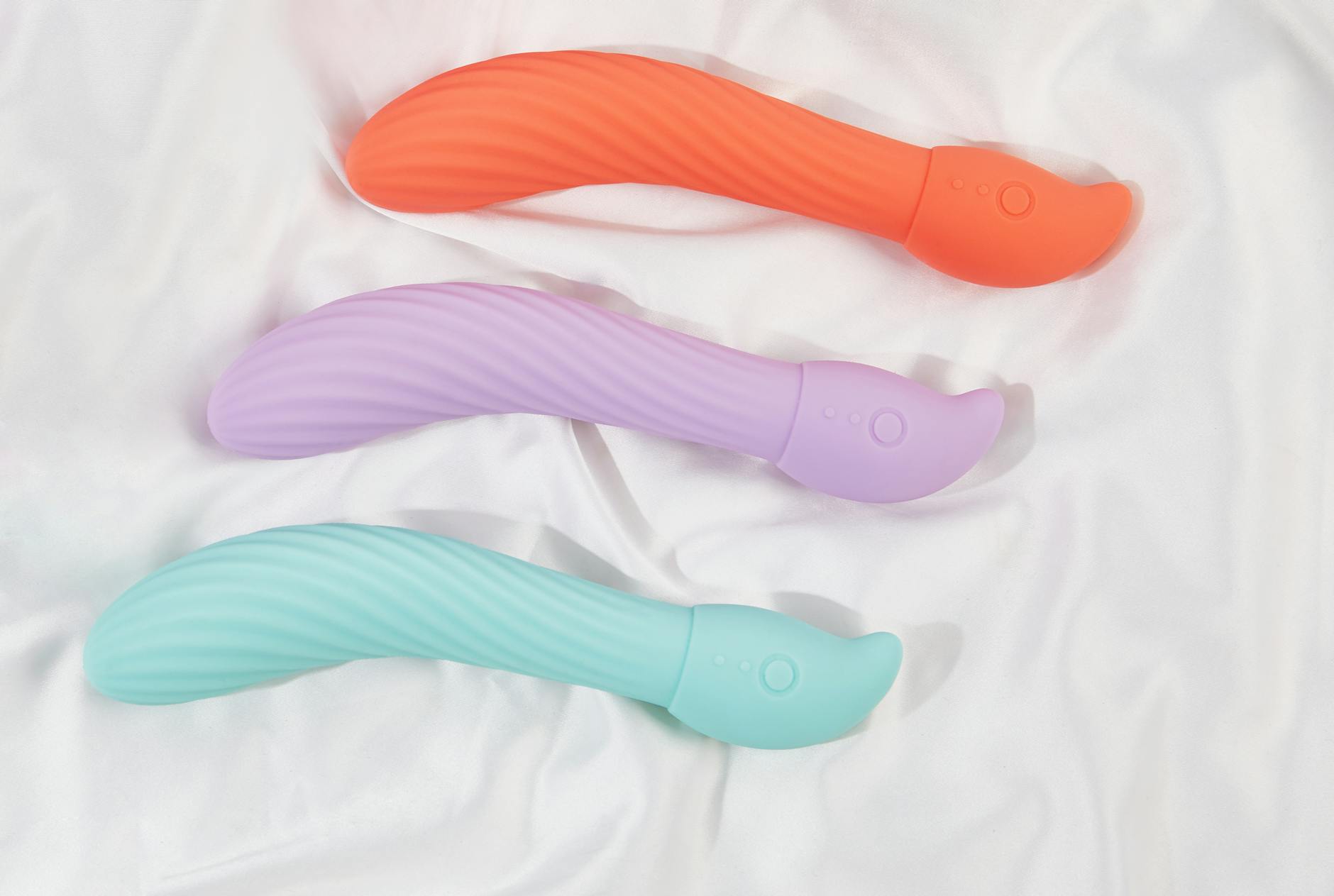
Orgasms are not one-size-fits-all
Here's what nobody tells you: the orgasm you have at the beginning of your cycle feels completely different from the one at day 18. The one you have alone, relaxed in bed, is nothing like the one you have when you're slightly stressed but present with a partner. And the orgasm you chase feels nothing like the one that surprises you.
This is not a failure of technique. This is biology. And it's actually the best part because it means your lemon vibrator is not a one-note device. It's a whole toolkit.
Why settings matter more than you think
When I work with couples and individuals exploring lemon vibrators (the air-suction clitoral vibrators from Hello Nancy), the biggest breakthrough happens when people stop thinking "faster equals better" and start thinking about what sensation actually matches the orgasm they want right now.
The Lem, for example, has multiple intensity levels and pulse patterns. Most people grab the highest setting and hold it there. But that's like buying a six-speed bike and only riding in sixth gear. You miss the whole point.
Low intensities (settings 1-3) stimulate nerve endings without overwhelming them. Mid-range settings (4-6) create that perfect balance between buildup and sensation. High settings (7+) are for when your body is already primed and you want to push over the edge fast.
Pattern matters just as much. Steady pulses create a rhythm your body can anticipate and build on. Scattered patterns keep things unpredictable, which is useful when you want something fresh or when you're redirecting focus away from performance anxiety.
Four orgasm types and how to chase each one
The Quick Release (5-10 minutes)
You know the feeling. You're short on time, or you're on a deadline, or your body just wants to get there. This is not lazy. This is efficient.
Start at setting 5 or 6. Use a steady pulse pattern (not random). Position the Lem so it's making direct contact with your clitoris, not sliding around. Breathe normally. Your body doesn't need foreplay here. Your mind needs permission.
Why higher intensity works: your nervous system reads the signal faster. There's less ground between stimulation and peak. If you rush with a low setting, you're fighting biology.
Pro move: have lubricant ready, but you might need less than usual. The suction seal does most of the work.
The Slow Build (20-35 minutes)
This is the orgasm that feels like a whole experience. You want to feel every stage. This is what many people call their "favorite" because there's time for anticipation, for your mind to catch up, for the sensations to layer.
Start at setting 2 or 3. Spend 5-8 minutes here, letting your body warm up. Move to setting 4 after that. Then 5. Then 6. This is a graduated climb.
Use a pattern that feels meditative. Steady is better than chaotic here. Your nervous system needs time to recognize the pleasure buildup. Random bursts interrupt that rhythm.
The key: do not skip levels. People who rush through the settings miss the full arc. A slow build has a beginning, middle, and end. Jumping to setting 6 skips the beginning entirely.
When to use this: alone, when you have mental space, when you want to feel reconnected to your body, when you're rebuilding sensitivity after hormonal changes or medication side effects.
The Blended Orgasm (variable, 15-40 minutes)
This is the one where multiple sensations stack. Maybe you're using the Lem on your clitoris while a partner stimulates your G-spot. Maybe you're clenching your pelvic floor while the vibrator builds. Maybe you're mentally present while your body does the work.
Start lower than you think you need to (setting 2-3). The stacking effect means you don't need high intensity to reach the peak. Use a pattern that feels rhythmic but not robotic. Your body will tell you when to move up.
Where positioning matters: angle the Lem slightly so it's hitting the external clitoral head but also some of the surrounding tissue. This creates a broader sensation. Internal stimulation + clitoral vibration creates the "blend."
Breathing is crucial here. Breathe into your belly, not your chest. Let your pelvic floor relax on the inhale and engage on the exhale. The orgasm that comes from layering often feels stronger and lasts longer.
The Plateau Orgasm (30+ minutes, potentially multiple peaks)
Some bodies like to live right on the edge. Not coming, not leaving, just... suspended in really intense sensation. This is a legitimate way to experience pleasure, and it's wild once you learn how to chase it.
Use setting 5-7, steady pulse. The goal is not to come. The goal is to stay here. When you feel yourself starting to build past the plateau, back off to setting 3-4 for 30 seconds, then return to 5-7. You're teaching your body to hold the sensation.
After 3-5 cycles of plateau-and-back-off, your nervous system is flooded with sensation. When you finally let yourself come, it's explosive.
Why this matters: not every sexual moment needs to end in orgasm. But when you practice plateauing, you learn that the pleasure you can access at that heightened level is absolutely worth lingering in.
How your cycle changes which settings work best
Your hormones are not the enemy here. They're information.
During the follicular phase (days 1-14, roughly), estrogen is climbing. Your tissues are plumper, more sensitive, and your nervous system responds faster. Lower settings feel more intense. Use settings 2-5 and expect to reach a peak faster.
During the luteal phase (days 15-28), progesterone is high. You need more buildup time and often higher intensity to reach the same sensation. Use settings 4-7. Longer warm-up time. More patience.
Right around ovulation and menstruation, your sensitivity shifts. Some people find orgasm easier. Others find it harder. This is not failure. This is data. Adjust accordingly.
Common mistakes with lemon vibrators
Mistake one: thinking you need to use the highest setting from the start. You don't. Start low, observe what happens, move up. Your body adapts to sensation, so if you start at 8, by minute three it feels like 5.
Mistake two: keeping the same pattern every time. Variety is not just about novelty. It's about preventing your nervous system from getting too comfortable with one signal. Mix steady with pulsing. Mix patterns every week or so.
Mistake three: not using enough lube because "the suction is doing the work." Suction plus lubrication is smoother. Smoother means you can stay present instead of managing physical friction. Use water-based lube generously.
Mistake four: assuming that if an orgasm doesn't come, something is wrong. Sometimes orgasm isn't the goal. Sometimes the goal is sensation, connection, or just exploring what your body can feel. The moment you release the pressure to finish, orgasm often becomes easier.
When to experiment with settings and when to stick with one
If you're rebuilding sensitivity after hormonal changes (birth control, menopause, medication), stay with one setting for at least a week. Your nervous system needs consistency to learn the signal again. Pick setting 3-4 and use it daily. After seven days, move up slightly.
If you're exploring what different orgasm types feel like, do this: pick one setting and one pattern. Use that combination for five sessions. Notice what happens. Then switch. This is how you build a map of your own pleasure.
If you're with a partner and learning how to communicate what feels good, use the same setting while they observe and ask questions. It's easier to sync if the variable isn't constantly changing.
Once you know your body, mix it up. Orgasm is more interesting when you stay curious.
The role of breathing, pelvic floor, and mindset
Setting matters, but setting is maybe 60 percent of the equation.
Breathing matters more than you'd think. Shallow chest breathing keeps you in a slight panic state. Belly breathing (in through your nose for four counts, out through your mouth for six) activates your parasympathetic nervous system. Your body can't fully relax into pleasure when it's in mild fight-or-flight.
Your pelvic floor is not a fixed thing. It relaxes and tightens. For easier, faster orgasm, let it relax completely before you start. For blended or plateau orgasms, learn to pulse it intentionally while the vibrator works. This creates rhythm.
Mindset is the wildcard. You can have the perfect setting and the perfect technique and still not come if your brain is running a todo list or worrying about noise or questioning whether you deserve this. The orgasm that comes from a relaxed, present mind feels completely different from one you're chasing with anxiety. So before you adjust your vibrator, ask yourself what you're actually feeling.
FAQ: Lemon vibrator settings and orgasm
What if I can't orgasm on any setting?
Orgasm is not the point. Sensation is. Spend a few weeks using your lemon vibrator with zero expectation of coming. Just notice what feels good. Pay attention to patterns, intensities, positions. Orgasm often arrives when you stop chasing it. If you're on medication that affects orgasm (SSRIs, some birth controls), talk to your doctor about timing. Some people find that using the vibrator 2 hours after taking medication, rather than right before, makes a big difference.
Can I damage my clitoris by using the wrong setting?
No. Your clitoris is resilient. The suction sensation is gentler than direct vibration. What you can do is desensitize yourself temporarily by using very high intensities daily. If you find yourself needing higher and higher settings to feel anything, back off for a few days and use lower settings. Your sensitivity returns quickly.
Should I use the same setting every time or vary it?
Vary it. If you use the same setting every session, your nervous system adapts to that specific stimulus. It's like listening to the same song on repeat. It becomes background noise. Switching between settings keeps things fresh and actually makes your body more responsive overall.
Why do orgasms feel stronger on some settings than others?
Because different settings match different states of arousal. When you're barely warmed up, a high setting feels jarring. When you're already primed, a low setting feels like nothing. The "strongest" orgasm is the one where the setting matches your actual arousal level, not the one with the biggest number.
Can I use a lemon vibrator with a partner if we both want to finish?
Absolutely. If you're both working toward orgasm, start with both of you at lower settings (2-3) and build together. Use the same pattern so your bodies sync. Communication matters here. Tell your partner when you're building, when you're plateauing, when you're close. This is not just about technique. It's about presence.
What's the difference between a steady pulse and a random pattern?
Steady pulse is predictable. Your body builds anticipation and rhythm. It's easier to reach deep orgasm with steady patterns because there's momentum. Random patterns keep things interesting and prevent your nervous system from fully adapting. Use steady when you want focus. Use random when you want surprise or when you're redirecting away from overthinking.
The bottom line on settings
Your lemon vibrator is not one device with one function. It's a whole palette of sensations. The orgasm you want today is not the orgasm you want next week. The setting that works for quick release is not the setting that works for slow reconnection.
The people who get the most out of their clitoral vibrators are the ones who treat it like an instrument, not a tool. You wouldn't play a cello the same way you'd play a guitar. Learn your instrument. Experiment. Notice what your body is telling you. The more you explore different approaches with a partner, the more you learn about what actually works for both of you.
Your pleasure is not one-dimensional. Neither is your vibrator. Act accordingly.