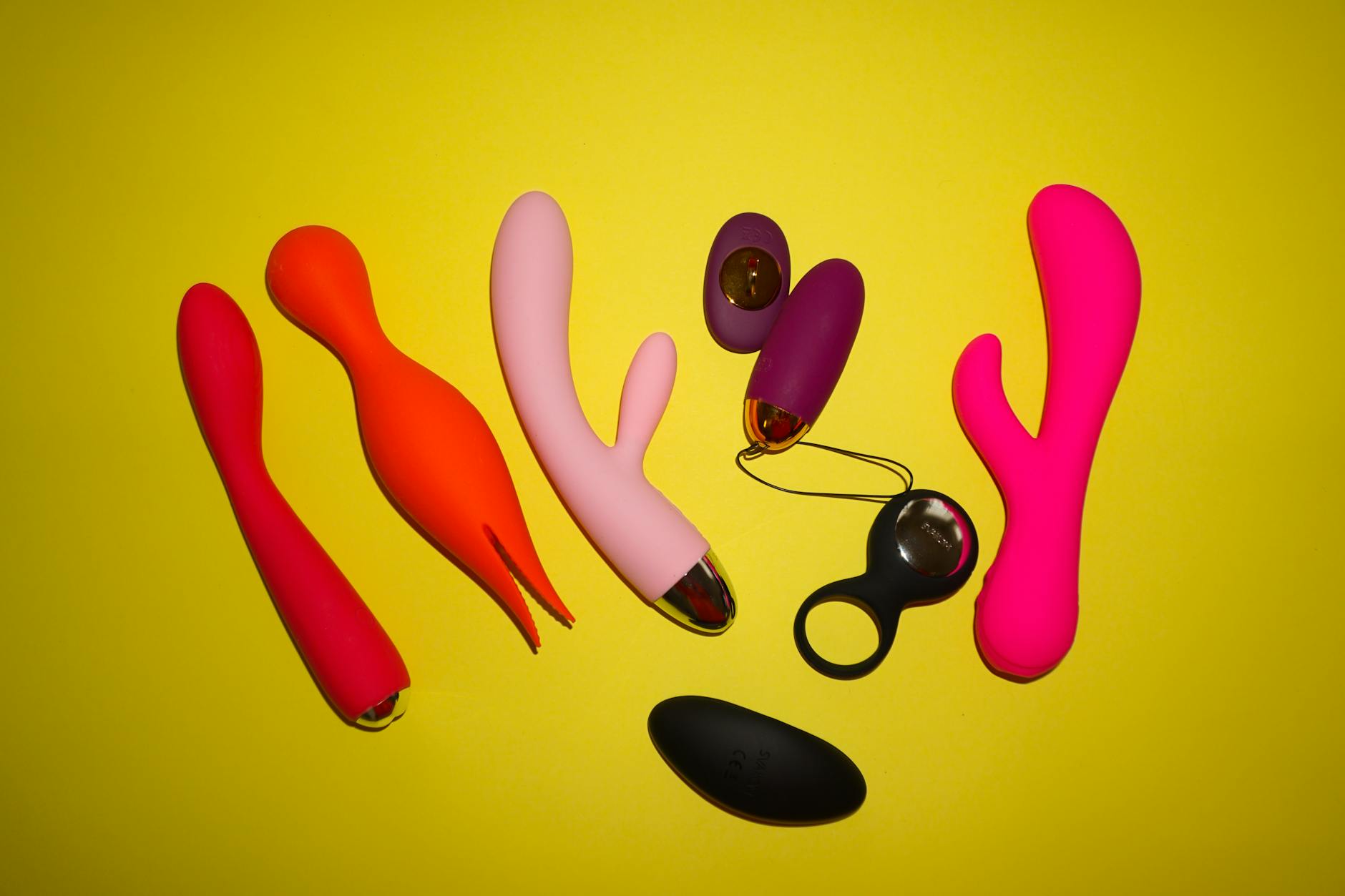
Here's the thing about vibrator sensitivity
If you picked up a lemon vibrator and felt... nothing much? You're not broken. Your nerve endings aren't dead. Your clitoris isn't numb forever. What's actually happening is that your body is experiencing what we call "sensory gating," and it's completely normal.
Sensory gating is your nervous system's way of filtering out constant stimulation so you don't stay locked in a state of high alert. When you first introduce a vibrator, your brain essentially says "okay, this is new information" and pays close attention. But if that stimulation stays the same, your nervous system gradually dampens the signal. It's the same reason you stop noticing the hum of your refrigerator or the weight of your clothes. Your body adapts.
The good news? This isn't permanent, and it's not a sign that vibrators aren't for you. It's actually a sign that your nervous system is doing exactly what it's supposed to do. And with the right approach, sensitivity improves dramatically.
Why the first session feels different from the tenth
There are three separate things happening when you use a lemon clitoral vibrator for the first time, and they all affect how much sensation you register.
Novelty wears off. That initial jolt you might feel on day one is partly your nervous system's reaction to something brand new. By session three, your brain has filed this experience away, so the "wow factor" naturally decreases. This is not failure. This is your nervous system working correctly.
Your attention shifts. The first time, you're focused on "Is this working? Am I doing it right? Why doesn't it feel like what I expected?" That internal commentary takes up mental bandwidth that could be going toward actual sensation. By week two, you stop narrating and just experience, which paradoxically makes the sensation feel stronger.
Your tissue is learning. The clitoris has about 8,000 nerve endings concentrated in a tiny area. When you use a suction vibrator like the lemon model, you're creating micro-movements in the tissue that gradually wake up nerves that may have been dormant. This isn't an instant process. It takes repetition.
Most people who say "vibrators don't work for me" have stopped using them after three or four attempts. They quit right before the sensitivity actually kicks in.
The four-week sensitivity progression that works
I recommend this specific timeline to every client who feels stuck with a lemon vibrator or any clitoral vibrator.
Weeks 1-2: Novelty and learning. Use your lemon vibrator 2-3 times per week. Don't expect fireworks. Your only job is to get familiar with the sensations and start noticing what level of suction, what pattern, what angle feels least jarring. Keep it under 10 minutes. If you feel nothing, that's expected. If you feel overstimulated, you're using too high an intensity (drop to level 1 and build). This phase is about desensitizing the "foreign object" response, not about getting off.
Weeks 3-4: The pivot point. By week three, something shifts. Most people report that the vibrator starts feeling less numb and more... actually pleasurable. Increase sessions to 3-4 times per week if that's realistic for you. You can extend to 15-20 minute sessions. This is when you might start experimenting with patterns or adding manual stimulation alongside the vibrator. Many people have their first real orgasm with a clitoral vibrator somewhere in this window.
Weeks 5-8: Building depth. The sensitivity is now consistent, and you're learning nuance. This is when you can start exploring combinations: using your lemon vibrator with a partner, trying different positions, experimenting with the full range of intensities. Your nervous system has stopped trying to filter out the stimulation and is instead processing it as pleasurable.
Week 9 onward: The conversation changes. Once you're past the eight-week mark with consistent use, you're past sensory adaptation. If sensitivity decreases, it's usually because of something else: stress, hormonal shifts, medication changes, or genuinely needing a different type of stimulation. But the "vibrator doesn't work" phase is over.
The mechanism here isn't mysterious. Your nervous system needs repetition to recognize a sensation as safe and potentially rewarding. Novelty creates initial intrigue, but it also creates noise. Repetition cuts through the noise.
Why starting too high ruins everything
One of the biggest mistakes people make is cranking a lemon vibrator straight to level 4 or 5 on the first session. From a nervous system perspective, this is like turning up music so loud you can't hear the melody anymore. Your brain just registers "intense stimulation," which triggers either pleasure or overwhelm, but rarely subtle sensation.
If you start at level 1 or 2, you're giving your nervous system information to process gradually. Over three weeks, you can increase. Your tissue is also more resilient when you build intensity slowly. Starting high and staying high often leads to a sensation of numbness because you've essentially trained your body to expect and filter out high-level input.
I always tell people: if you wouldn't start a new exercise program by doing your maximum weight, don't start a vibrator program by using maximum intensity. The progression matters more than the endpoint.
Mental blocks that feel like sensitivity problems
Here's where things get tricky. Sometimes what feels like "the vibrator doesn't work" is actually anxiety, self-consciousness, or expectation fatigue.
If you're thinking "this should be amazing by now, why isn't it?" while using a lemon vibrator, your prefrontal cortex (the analytical part of your brain) is competing with your sensory cortex for processing power. Sensation loses. The solution isn't a different vibrator. It's shifting your internal narrative from "prove it works" to "see what happens."
Similarly, if you're using a lemon clitoral vibrator in a context where you feel watched, judged, or rushed, your nervous system is in a low-level stress response. Stress dampens sensation. The vibrator becomes a prop in a performance rather than a tool for pleasure.
This is why solo sessions in the first four weeks are usually more effective than partnered sessions. You have bandwidth for sensation instead of bandwidth for managing someone else's presence. Once sensitivity is established, adding a partner or different context is much easier.
When it's not about sensitivity, it's about fit
There's a real possibility that a particular style of clitoral vibrator just isn't your thing, and that's fine. Some people respond better to the suction of a lemon vibrator. Others need direct vibration. Some need a wand. Some need combination play.
But here's the important distinction: you can't know that after one session. You need at least four weeks of consistent, low-pressure use before you can accurately say "this approach doesn't work for me." Before that, you're just watching sensory adaptation happen in real time.
If you're four weeks in, using levels 1-2, in a relaxed context, with no performance pressure, and a lemon vibrator still registers as basically nothing, then you might genuinely be someone for whom suction-based stimulation isn't the primary pathway. That's useful information. But most people never get to that conclusion because they quit at week two.
The science of why practice makes pleasure better
Your clitoris is connected to the same area of your brain (the sensorimotor cortex) as your fingertips and lips. This isn't metaphorical. When you practice using a clitoral vibrator consistently, you're literally expanding the neural real estate devoted to clitoral sensation. This is called cortical mapping, and it's a real neurobiological process.
Over time, not only does sensation improve, but the quality of your orgasms often changes too. People frequently report that orgasms feel deeper, more full-body, more intense after they've spent several weeks with a new tool. That's not placebo. That's your brain literally reorganizing to process clitoral stimulation as a higher priority.
This is also why someone might have a stronger orgasm from a lemon vibrator in week eight than they ever had from anything else. They've given their nervous system time to optimize.
Common mistakes in the progression
If you're trying to build sensitivity and it's stalling, check these:
Are you taking breaks long enough for sensory adaptation to reset? If you're using a vibrator daily for two weeks, then taking a five-day break, you've essentially reset your progress. Consistency matters more than frequency. Three times per week for eight weeks beats daily for two weeks, then nothing.
Are you layering too many changes at once? Don't change the intensity, add a partner, change the location, and increase session length all in the same week. Change one variable at a time so you can track what actually affects sensation.
Are you maintaining realistic expectations for your arousal state? Sensitivity builds faster if you're already somewhat aroused when you start. If you're trying to use a vibrator completely cold, you're working uphill. Spend five minutes on solo foreplay first.
Are you using enough lube? Water-based lube doesn't interfere with suction (silicone lube does), and it lets the vibrator move more effectively across tissue. This isn't about "not being wet enough." It's about mechanics.
The conversation with your partner, if you have one
If you're building vibrator sensitivity and you share a bed with someone, it helps to be clear about what you're doing and why. "I'm using this solo for four weeks to see how my body responds" is very different from "I want this incorporated into what we do together immediately."
Many couples skip the individual discovery phase and jump straight to integration, which often backfires. You're trying to manage your partner's comfort, your own arousal, your own learning curve, and your partner's involvement all at once. That's four things competing for attention. Sensitivity can't build in that environment.
If you're working through pleasure together after a transition, the same principle applies. Solo practice first. Shared exploration once you know what your body actually responds to.
When sensitivity stalls (and what to do)
If you hit week five and sensation is still pretty muted, here are the most common culprits:
Stress and nervous system load. If you're in a high-stress period, your vagus nerve is partially engaged in managing that stress, which leaves less capacity for pleasure signaling. Sensitivity often bounces back once the stressor passes.
Medication changes. Antidepressants, birth control, and blood pressure medications can all affect clitoral sensation. If sensitivity was building and then suddenly plateaued, and you started something new, that's worth noting (not worth stopping the medication, but worth telling your doctor about).
Need for variation. Sometimes at week five, your nervous system is optimized for the stimulation pattern you've been using, and novelty helps. Try a different intensity pattern, a different time of day, or (if you're open to it) a different tool.
Underlying tension. If your pelvic floor is chronically tight from stress or habit, sensation can feel muted even if your nerve endings are firing fine. Gentle breathing work or pelvic floor relaxation (the opposite of Kegels) sometimes unlocks things.
Hormonal cycle. If you're cycling, sensation often feels stronger in the first half of your cycle (higher estrogen) and sometimes more muted in the luteal phase. This is normal, and tracking it can help you adjust expectations.
The long view
Once sensitivity is built, it's relatively stable. You won't lose it if you take a week off. You won't suddenly need to restart from zero. You've given your nervous system new information, and it sticks.
Many people find that after eight weeks with a lemon vibrator or any clitoral vibrator, they're surprised by what becomes possible. Partnered sex feels different. Solo sessions are more satisfying. Orgasms are more intense. And the "this doesn't work for me" story they told themselves in week two is just gone.
Your sensitivity isn't broken. It's not an inherent limitation. It's a system that needs introduction and repetition before it optimizes. Give it time.
FAQ: Building sensitivity with clitoral vibrators
How long does it really take for a vibrator to feel good?
Most people notice improvement by week three. By week eight, the shift is usually unmistakable. If you're at week four and feeling nothing, that's also normal. Some nervous systems take eight to ten weeks. The key is that you're tracking what's happening, not judging it as "right" or "wrong."
Can I use my lemon vibrator every day, or will I get used to it faster?
Daily use doesn't hurt, but it doesn't speed up the process either. Your nervous system needs recovery time to process stimulation as pleasurable rather than just novel. Three to four times per week usually optimizes progress without creating fatigue. If you want to use it daily, keep sessions shorter.
Does sensitivity building work if I've never had an orgasm from anything?
Yes, but the timeline might be longer. You're building neural pathways that may not exist yet. Eight to twelve weeks is more realistic. Also consider working with a sex-positive therapist if this is a broader pattern, because sometimes blocks are emotional or relational rather than mechanical.
What if I'm using a lemon vibrator but my partner wants something different?
This is about alignment, not about whose preference is "right." If you're exploring pleasure with different preferences, spend individual time building your own sensitivity first. Once you know what you respond to, it's much easier to negotiate what you do together.
Can I build sensitivity faster by trying higher intensities?
No. Higher intensity often slows the process because it overwhelms the nervous system, increasing sensory gating. Low intensity, consistent repetition, patient progression. This isn't romantic, but it's how nervous systems actually learn.
Is it normal for sensitivity to fluctuate within a single session?
Absolutely. Your arousal goes up and down. Your attention wanders. Your position shifts. This is all normal. What matters is the week-to-week trend, not the moment-to-moment variation. If week eight feels better than week two, the process is working.