
Why Lemon Vibrators Feel Different During Different Relationship Stages
Let's be real. The lemon vibrator you loved in year one of your relationship might feel completely different in year five. Not because the toy changed. Because you did.
I spend a lot of time with couples navigating the messy middle of long-term relationships. And one thing I've noticed: people often blame their toys, their hormones, or their libido when something subtle has shifted. They don't realize that pleasure is a two-way street between your body and your emotional state. Relationship stages are emotional states. So it makes sense that a lemon clitoral vibrator feels different depending on where you are.
The early honeymoon phase: maximum intensity, maximum distraction
In the first 6-18 months of a relationship, your nervous system is flooded with novelty neurotransmitters. Dopamine, norepinephrine, oxytocin. These aren't just "feel-good chemicals." They directly affect nerve sensitivity. Your clitoris is more engorged with blood. Your pelvic floor is more relaxed (because you're less anxious). Sensation feels sharper, orgasms come faster.
This is why people report that the lem vibrator felt absolutely mind-blowing when they first got it with a new partner. The toy is the same. Your nervous system is running on novelty fuel.
Here's what matters: if you're in this phase, you might not need longer warm-up times or specific settings. Pattern 3 on a lemon clitoral vibrator might send you over the edge in five minutes. That's not a sign of the toy's power. That's a sign of where you are emotionally.
The stable middle years: pleasure requires permission
Around years two through seven of a relationship, novelty wears off. This is actually when most couples tell me they start exploring toys seriously.
Why? Because the stress of real life (work, household logistics, family stuff) has suppressed the automatic arousal systems. Your nervous system isn't bathed in dopamine anymore. You're in what I call "managed intimacy" mode. Sex doesn't happen by accident. It requires intention.
This is when a lemon vibrator's tactile feedback becomes crucial. People often tell me that they need stronger sensation than they did early on, not because their body changed, but because their baseline anxiety is higher. They're not distracted by infatuation. They're distracted by whether the laundry got done.
The psychological shift here is huge. Early on, pleasure felt like a gift your body was giving you. In the stable years, pleasure feels like something you have to give yourself permission to have. A good clitoral vibrator becomes a tool for that permission. It says: "Okay, I'm setting aside 20 minutes. This matters."
The stress-heavy years: numbness that isn't physical
If you've had major life transitions in your relationship (a new kid, a career crisis, an illness, a loss), you might notice that a lemon vibrator feels less effective.
You're not broken. Your nervous system is in protection mode.
When chronic stress or grief is present, your body deprioritizes pleasure systems. It's an ancient survival mechanism. Your vagus nerve (which controls arousal response) is diverted to managing threat perception. Even if you're using the exact same device at the exact same intensity, you won't feel it the same way.
I see this most often in couples adjusting to parenthood or managing a partner's health crisis. The lemon vibrator feels muted not because the toy is weak, but because your nervous system is elsewhere. The solution isn't a stronger toy. It's recognizing that pleasure requires a parasympathetic shift first. That might mean shorter sessions, different timing, or even a temporary break.
The reconnection phase: pleasure needs slowness
Many couples come to me after a period of disconnection. Sometimes it's months of no sex. Sometimes it's years of mechanical, obligatory intimacy.
When you're rebuilding, a lemon vibrator suddenly feels strange. Not bad. Strange.
This happens because your nervous system has learned to protect itself. You've gotten used to not expecting pleasure from that channel. When you return to it, the sensation can feel almost overwhelming. People describe it as too intense, or weirdly numb, or even uncomfortable. Both are normal.
This is when you might want to explore how to use a lemon vibrator to rebuild intimacy after long-term relationship disconnect. The device itself is a bridge. But it works best when you understand that your nervous system needs permission to feel safe again.
The long-term partnership: pleasure becomes nuanced
After 10-15+ years together, something interesting happens. Pleasure becomes less about intensity and more about subtlety.
Your nervous system knows your partner. It trusts the environment. This means you can access deeper, more complex sensations. People often tell me their orgasms in year 12 of a relationship are more emotionally resonant than in year two. Not necessarily stronger. More meaningful.
A clitoral vibrator like the lem starts to feel like a language you share rather than a novelty. You know which patterns work. You know when you need it. You know when you don't. This is when the toy becomes truly integrated into your intimate life rather than something you're trying out.
What actually changes: it's all nervous system
Your clitoris doesn't lose nerve endings when you've been with your partner for a decade. Your pelvic floor doesn't weaken because the relationship stabilized. What changes is your baseline cortisol, your pelvic floor tension, your capacity to relax, and your psychological permission to prioritize sensation.
This is why the same lemon vibrator can feel radically different at different points in your relationship. It's not the toy. It's the system that receives it.
What helps across all stages
Four things that matter no matter where you are:
Communication. Tell your partner when sensation feels different. Not "I'm broken" or "this toy doesn't work anymore." Say "My nervous system is in a different place right now, and I need to adjust." That's accurate and actionable.
Timing. Earlier in relationships, pleasure happens readily. Later, it requires scheduling. Not because romance dies. Because your nervous system needs preparation. Budget time. It's not less sexy. It's actually more intentional.
Stress awareness. If you're in a heavy period (work crisis, grief, family stress), don't be surprised if a lemon clitoral vibrator feels less effective. Your nervous system is managing threat. The toy is fine. You're navigating something bigger. Give yourself grace.
Lube, always. The one constant across relationship stages is that water-based lube improves sensation. Tissue changes with hormones, stress, and age. Lube compensates. Use it without apology.
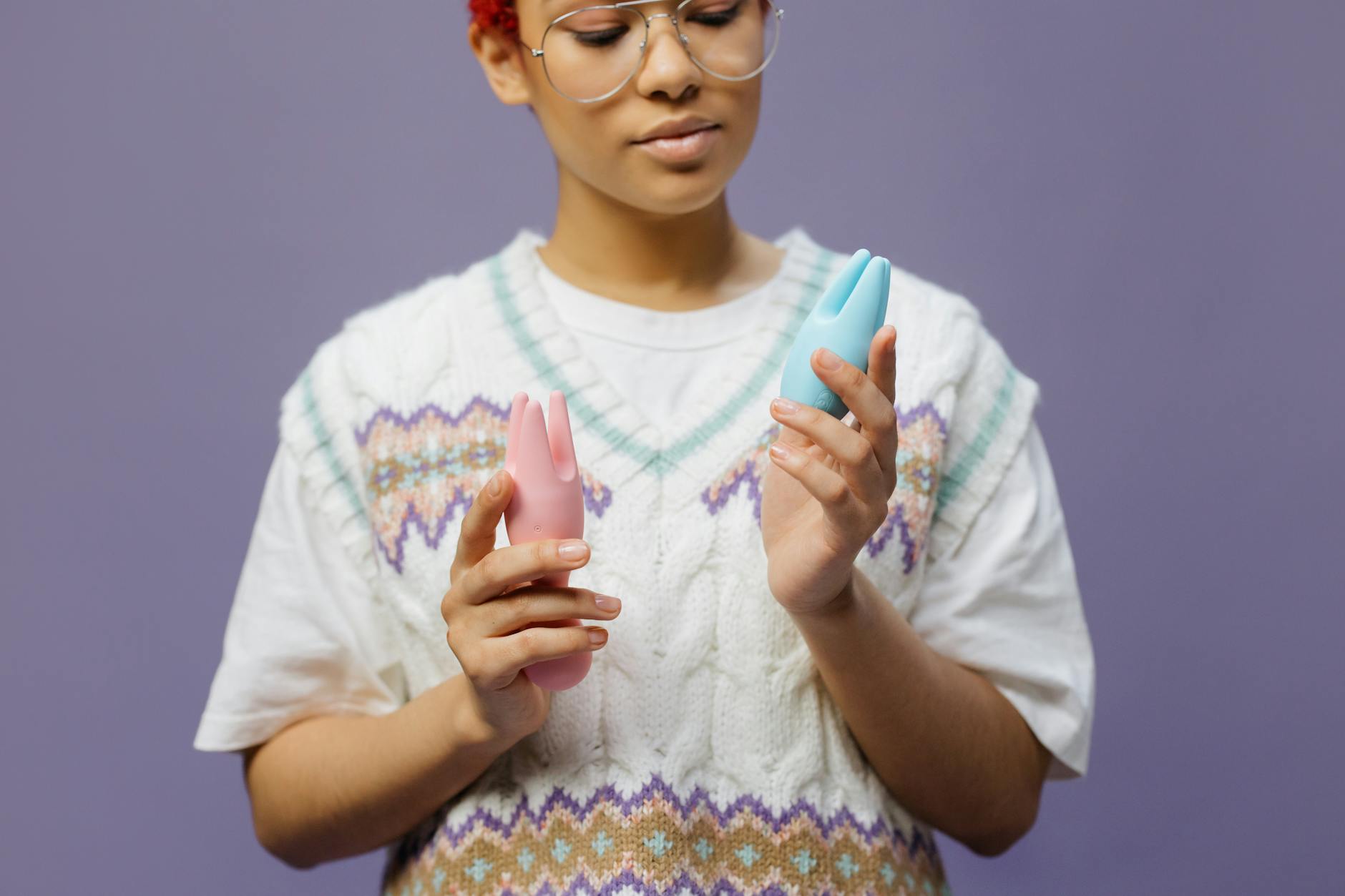
Photo by cottonbro studio on Pexels
Why this matters for your relationship
When couples understand that sensation shifts across relationship stages, it takes the shame out of "it doesn't feel as good anymore." You stop blaming the toy. You stop blaming your body. You stop blaming your partner.
Instead, you recognize something true: your nervous system is responding to where you actually are. And that's information. It's not a problem to fix. It's a signal to understand.
The lemon vibrator is the same. You're different. And that's completely okay.
People also ask
Why does my lemon vibrator feel less intense after being together for years?
After the initial novelty phase (usually 6-18 months), your nervous system normalizes. The automatic dopamine surge that made early sensation feel explosive wanes. You're not broken. You're in a different neurological state. Chronic relationship stress and daily life logistics also elevate your baseline cortisol, which dampens arousal response. This is why many couples report needing to be more intentional about intimacy later on. The solution isn't a stronger toy. It's understanding that pleasure requires parasympathetic activation (rest-and-digest mode), which takes longer to access when you're managing real-world stress.
Can a lemon clitoral vibrator help reconnect after a long break from sex?
Yes, but you need to approach it carefully. When couples have been disconnected for months or years, the nervous system has learned to protect itself from disappointment or awkwardness. A lemon vibrator can be a powerful bridge because it removes pressure and performance anxiety. You're not relying on spontaneous arousal or partner response. You're creating a safe container for sensation to return. Start with shorter sessions, lower intensity, and lots of lube. You might also want to read about how to use a lemon vibrator with your partner after a long break from sex for specific techniques.
Does stress in a relationship affect how a lemon vibrator feels?
Absolutely. When couples are in conflict or managing chronic stress together (financial pressure, health issues, grief), cortisol rises and arousal circuitry quiets down. A lemon vibrator might feel less sensitive, less responsive, or even uncomfortable. This isn't a sign that the toy is weak or that you're broken. It's a sign that your nervous system is in protection mode. In these periods, pleasure often requires more time, more lube, and more emotional safety work before the toy feels good again. Sometimes a break is actually the kindest option.
Why do lemon vibrators feel different during different hormonal phases within a relationship?
If you're cycling (pre-menopause or not on hormonal birth control), estrogen and testosterone fluctuate monthly. This affects tissue thickness, blood flow to the clitoris, and pelvic floor tension. A lemon vibrator might feel amazing during ovulation (when estrogen peaks) and less sensitive during your period or luteal phase. This is completely normal and has nothing to do with relationship stages. It's just your body's monthly rhythm. Tracking these patterns helps you understand your own sensation better and use the toy intentionally across your cycle.
Can relationship conflict make a lemon clitoral vibrator feel uncomfortable?
Yes. When there's unresolved conflict, contempt, or emotional distance, your nervous system perceives your partner's presence as a mild threat. This activates your sympathetic nervous system (fight-or-flight) even during intimate moments. Sensation becomes harder to access, or can even feel painful or numb. Some couples find that using a lemon vibrator solo first helps rebuild a sense of safety and pleasure in your own body. Then, as emotional repair happens, reintroducing it as a couple can strengthen reconnection. The toy can't fix relationship conflict, but it can help you rebuild nervous system safety once the emotional work is underway.
Is it normal for orgasms with a lemon vibrator to feel less intense after several years together?
Yes. And it's not actually a loss. Early relationships bring explosive orgasms because your nervous system is novelty-driven and anxiety-free. Long-term relationships bring deeper, more emotionally complex orgasms because there's trust and history. You're not chasing the same intensity. You're accessing something different. Many couples report that orgasms in year 10 feel less like fireworks and more like waves. That's not worse. It's just different. If you genuinely miss the intensity, check in with whether stress, hormonal changes, or emotional distance might be dampening your arousal baseline. Sometimes the solution is addressing those things, not finding a stronger toy.
The bottom line
Your nervous system is not static. It changes across relationship stages, across life stress, across hormonal cycles. The lemon vibrator you have is the same device. But the person using it is constantly evolving.
That's not a problem. That's just the reality of being in a long-term relationship. And understanding it takes so much of the shame and frustration out of pleasure.
If you're navigating a specific transition right now, whether that's early connection anxiety, midlife relationship disconnect, or stress-related numbness, you don't have to figure it out alone. Reach out to talk through what's actually happening with your body and your relationship. Contact Hello Nancy to learn more about resources and support.